

Air pollution doesn’t just harm your lungs – it can disrupt your hormones too. Pollutants like PM2.5, NO₂, and ozone can throw off your hormonal balance by mimicking hormones, blocking receptors, or causing oxidative stress. This can affect everything from stress and metabolism to fertility and thyroid function.
Key Takeaways:
- Pollutants disrupt hormones: PM2.5 and NO₂ generate oxidative stress, impacting glands like the thyroid and ovaries.
- Reproductive health risks: Studies link higher PM2.5 exposure to faster estrogen declines, fertility issues, and menopause symptoms.
- Thyroid and stress hormones: Urban air pollution can interfere with thyroid function and elevate cortisol levels.
- Protect yourself: Use HEPA filters, avoid gas stoves, and limit outdoor activity on high-pollution days.
Your hormonal health is tied to the air you breathe. Taking steps to reduce exposure can help safeguard your well-being.
The Air In Your House Is Disrupting Your Hormones And Your Metabolism | Solo EP. 240
sbb-itb-fc951a8
How Air Pollutants Disrupt Hormonal Systems
When air pollutants like PM2.5, NO₂, or ozone enter your body, they set off a chain of biological reactions that disrupt hormonal balance. These pollutants generate reactive oxygen species (ROS), which damage cells and trigger oxidative stress. This stress doesn’t stay localized – it spreads, affecting critical hormone-producing organs like the thyroid and ovaries. As a result, these organs struggle to produce and release hormones properly. Let’s break down how this process unfolds.
Oxidative Stress and Hormone Imbalance
The oxidative stress caused by air pollution has a particularly strong impact on reproductive hormones. A major study conducted in 2024 as part of the SWAN research program followed 1,365 women starting in 1999. The study found that for every 10 µg/m³ increase in PM2.5 exposure, there were measurable declines in estradiol (E2) and FSH levels across different menopausal stages. The effects were most pronounced during perimenopause – a time when hormonal shifts are already occurring. Exposure to pollutants like PM2.5 and NO₂ during this phase may accelerate declines in hormone levels, intensifying symptoms such as hot flashes.
In postmenopausal women, a 10 ppb increase in NO₂ exposure was linked to a –1.1% annual change in FSH levels (95% CI: –2.1, –0.1). Similarly, a 5 ppb rise in ozone levels corresponded to a –5.1% reduction in FSH levels (95% CI: –8.9, –1.1). These findings suggest that pollutants disrupt hormones through unique biological pathways. Supporting evidence from animal studies shows that mice exposed to PM2.5 and NO₂ had longer estrus cycles, fewer ovarian follicles, and higher rates of pregnancy loss.
Pollutants like PM2.5 and black carbon also accumulate in ovarian tissue, where they trigger inflammation and damage follicles, speeding up the decline in estrogen. The thyroid, another crucial hormone-producing organ, is also highly sensitive to oxidative stress. It relies on a fine balance of antioxidants to function properly, and an excess of ROS can throw this balance off, impairing thyroid hormone production. Beyond affecting hormone production, pollutants can also directly interfere with how hormones function at the cellular level.
How Pollutants Interfere with Hormone Receptors
Air pollutants don’t just harm hormone-producing organs – they also mess with hormone receptors. Certain chemicals, such as polycyclic aromatic hydrocarbons (PAHs) from combustion, have structures similar to natural steroid hormones. This allows them to bind to estrogen or androgen receptors. When this happens, the pollutants can either mimic natural hormones, activating the receptors incorrectly, or block them, preventing natural hormones from binding. Either way, this interference disrupts the normal signaling pathways that regulate vital processes like metabolism and reproduction.
For example, PM2.5 and black carbon have been shown to bind to estrogen receptors in ovarian tissue. This disrupts the feedback loop between the ovaries and the pituitary gland, which is essential for maintaining proper levels of E2 and FSH. In some cases, this leads to hormone resistance, where the body produces enough hormones, but the cells can’t respond because their receptors are blocked or damaged. Adding to the problem, pollutant-induced inflammation releases cytokines, which further impair receptor function and hormone signaling. Together, oxidative stress and receptor interference create a dual assault on hormonal health, explaining why air pollution can have long-term effects on the endocrine system.
What Recent Studies Show About Air Pollution and Hormones
Air Pollution and Reproductive Hormones
Recent research has shed more light on how air pollution impacts reproductive hormones, particularly during menopause. A 2024 SWAN study followed 1,365 women in various U.S. cities starting in 1999, examining how exposure to pollutants like PM2.5 and NO₂ affected estrogen levels. The study tracked hormone levels before, during, and after menopause, linking these changes to air pollution based on where participants lived. The results? Women exposed to higher levels of these pollutants experienced faster declines in estrogen, with lower average hormone levels by the time they reached menopause.
Ozone exposure also stood out. A 5 ppb increase in O₃ was connected to a 5.6% drop in FSH levels during transmenopause (95% CI: –9.8, –1.3) and a 5.1% drop postmenopause (95% CI: –8.9, –1.1). These hormonal shifts can worsen menopause-related symptoms like hot flashes, mood swings, sleep problems, and cognitive issues.
Amelia Wesselink from Boston University highlighted the SWAN study’s unique approach: "Unlike earlier research that focused on women of reproductive age or those undergoing IVF, this study used repeated hormone measurements before, during, and after menopause".
Animal studies add further weight to these findings. For instance, mice exposed to air containing PM2.5 and NO₂ experienced longer estrus cycles, fewer follicles, and reduced fertility. A 2023 study even discovered black carbon particles in human ovarian tissue and follicular fluid, suggesting pollutants can physically accumulate in reproductive organs. Together, these findings indicate that air pollution poses risks to fertility and reproductive health throughout a woman’s life.
Thyroid and Stress Hormones in Urban Areas
The effects of air pollution extend beyond reproductive hormones to thyroid and stress hormones, particularly in urban environments. While direct data on thyroid hormones like TSH and T4 in relation to PM2.5 and NO₂ exposure is limited, there’s growing evidence that poor air quality disrupts thyroid function. Urban pollutants can cause oxidative stress, which interferes with the thyroid’s ability to maintain its antioxidant balance and produce hormones properly.
Stress hormones, such as cortisol, are also influenced, though often indirectly. The LongITools study found that air pollution altered metabolites involved in steroid hormone biosynthesis, including pathways for both sex and stress hormones. These effects were more pronounced in older participants. Declines in estrogen linked to PM2.5 exposure may also contribute to higher cortisol levels, potentially worsening sleep and mood issues. However, direct measurements of cortisol in human studies remain scarce. This growing body of research underscores the broader risks environmental pollutants pose to hormonal health and balance.
Air Pollution vs. Other Environmental Factors
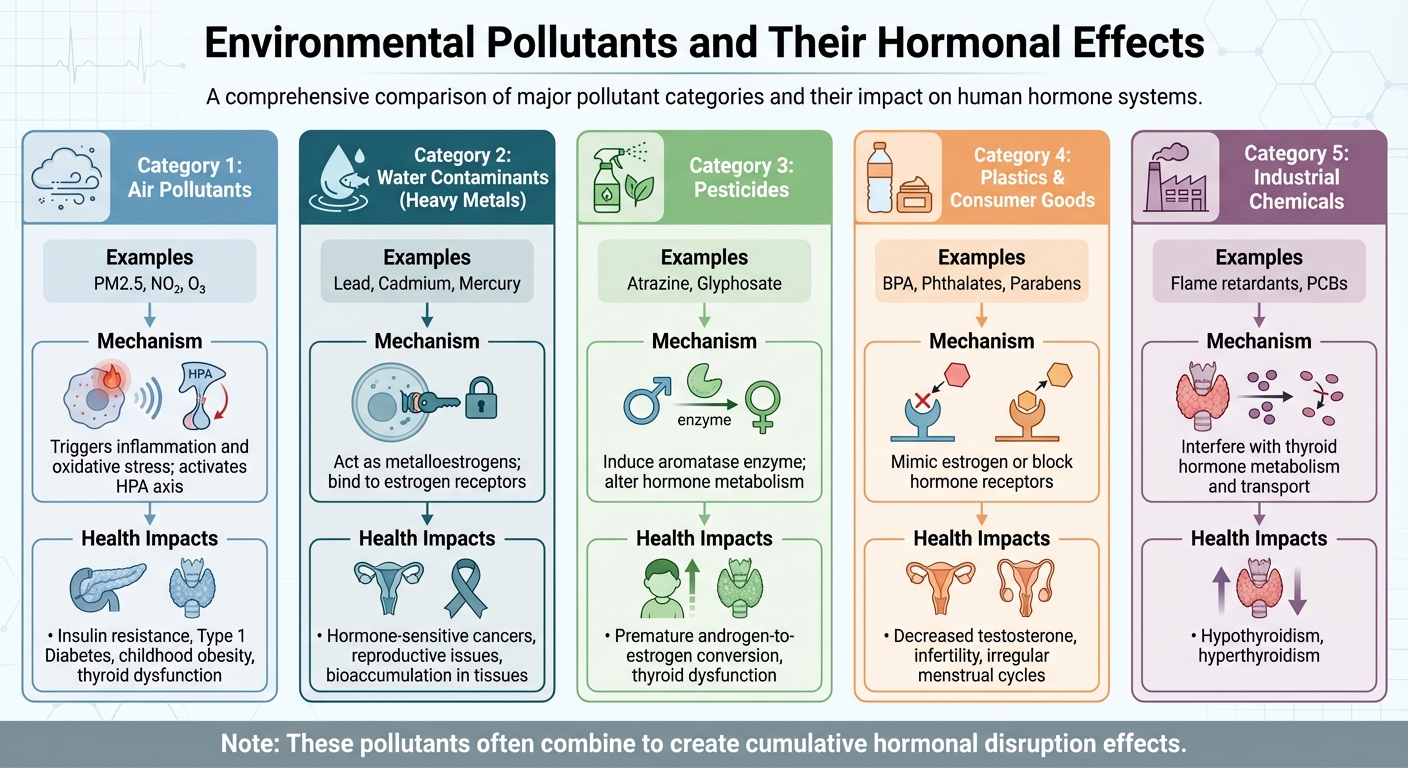
Environmental Pollutants and Their Hormonal Effects Comparison
Air pollution is a major player in disrupting hormonal balance, but it’s far from the only environmental factor you need to worry about. Contaminants in water and chemicals in everyday products also interfere with hormones, albeit through different mechanisms. Understanding these differences paints a clearer picture of how the environment affects your endocrine system.
Air pollutants like PM2.5 and NO₂ mainly disrupt hormones through inflammation and oxidative stress. This triggers the Hypothalamic-Pituitary-Adrenal (HPA) axis, often leading to chronic cortisol elevations. On the other hand, heavy metals found in water – such as lead, cadmium, and mercury – mimic estrogen by binding to estrogen receptors. These "metalloestrogens" can increase the risk of hormone-sensitive cancers and reproductive issues. Unlike air pollution, which is a constant exposure, water contaminants accumulate in fatty tissues over time, causing long-term imbalances.
Pesticides like atrazine and glyphosate take a different route by inducing aromatase, an enzyme that converts androgens into estrogens prematurely. Plastics and personal care products, often containing substances like BPA and phthalates, interact briefly but directly with hormone receptors, mimicking or blocking natural hormones. Industrial chemicals, including flame retardants and PCBs, interfere with thyroid hormone metabolism and transport, which can lead to thyroid dysfunction.
Table: Environmental Pollutants and Their Hormonal Effects
| Pollutant Category | Common Examples | Primary Hormonal Mechanism | Key Health Impacts |
|---|---|---|---|
| Air Pollutants | PM2.5, NO₂, O₃ | Triggers inflammation and oxidative stress; activates HPA axis | Insulin resistance, Type 1 Diabetes, childhood obesity, thyroid dysfunction |
| Water Contaminants (Heavy Metals) | Lead, Cadmium, Mercury | Act as metalloestrogens; bind to estrogen receptors | Hormone-sensitive cancers, reproductive issues, bioaccumulation in tissues |
| Pesticides | Atrazine, Glyphosate | Induce aromatase enzyme; alter hormone metabolism | Premature androgen-to-estrogen conversion, thyroid dysfunction |
| Plastics & Consumer Goods | BPA, Phthalates, Parabens | Mimic estrogen or block hormone receptors | Decreased testosterone, infertility, irregular menstrual cycles |
| Industrial Chemicals | Flame retardants, PCBs | Interfere with thyroid hormone metabolism and transport | Hypothyroidism, hyperthyroidism |
These pollutants rarely act alone. In reality, you’re often exposed to a mix of environmental threats – such as breathing polluted air, drinking water contaminated with pesticides, and using products with BPA. This combination amplifies hormonal disruption, creating a cumulative effect. Air pollution stands out as a global concern because it’s unavoidable and impacts the body through multiple pathways at once, including oxidative stress, neuroinflammation, and even epigenetic changes.
How to Reduce Hormonal Impacts from Poor Air Quality
Air pollution, especially fine particulate matter (PM2.5) and heavy metals, can significantly disrupt hormone regulation. To protect your hormonal health, you can focus on two key areas: advocating for policy changes and adopting personal strategies to minimize exposure.
Policy-Level Solutions
Strong regulations, such as the Clean Air Act, must target specific harmful components of PM2.5, like heavy metals, to address their impact on hormone disruption effectively. Broad limits alone aren’t enough. Research shows that a 38.6 μg/m³ increase in PM2.5 over three days can elevate estradiol levels by 24.7 pmol/L. This highlights the need for precise policies aimed at reducing water-soluble ions and heavy metals in the air.
Investing in sustainable transportation – like electric buses, pedestrian-friendly infrastructure, and bike lanes – can also help lower vehicle emissions. These changes reduce neuroendocrine stress and improve overall hormonal balance. While these reforms take time to implement, individual actions can provide immediate benefits.
Personal Protection Strategies
You don’t have to wait for policy shifts to start protecting yourself. Begin by reducing indoor air pollution. Eliminate sources like gas stoves, candles, incense, and tobacco smoke, which release pollutants that can interfere with hormone regulation. Opt for induction cooking and avoid high-heat frying, as these measures are more effective at lowering indoor PM2.5 levels than air filtration alone.
Use HEPA air purifiers in rooms where you spend the most time, such as bedrooms and living areas. These purifiers can capture 99.97% of particles as small as 0.3 microns. On days with poor air quality, move your workouts indoors to places like gyms or malls, and avoid exercising near busy highways. Since the most pronounced hormonal effects often occur three days after exposure, it’s wise to limit outdoor activities for a few days following high-pollution alerts.
Additionally, reduce exposure to endocrine-disrupting chemicals such as BPA, commonly found in plastics and household items. Taking these steps can help safeguard your hormonal health, even in challenging environmental conditions.
Conclusion: What You Need to Know About Air Quality and Hormones
Research clearly shows that air pollution significantly impacts hormonal health. Fine particulate matter (PM2.5) doesn’t just stay in the air – it penetrates deep into the lungs, enters the bloodstream, and disrupts key organs like the ovaries. Experts now recognize air pollution as a major risk factor for hormonal imbalances, affecting women at every stage of life.
For example, a 10 μg/m³ increase in PM2.5 levels can lower anti-Müllerian hormone (AMH) – a critical indicator of ovarian reserve – by 2.1%. This is especially concerning for couples trying to conceive, as the same increase in monthly PM2.5 exposure correlates with a 22% drop in fertility rates. Women exposed to the highest levels of PM2.5 are also 3.56 times more likely to develop Polycystic Ovary Syndrome (PCOS) compared to those with lower exposure.
Pollutants like heavy metals (e.g., arsenic, cadmium, mercury, and nickel) further complicate the picture. These substances can mimic hormones, block hormone receptors, or interfere with enzymes. Postmenopausal women, for instance, often experience elevated estradiol levels due to even minimal exposure to these toxins. Such findings highlight the urgent need for strategies to protect hormonal health.
Next Steps for Protecting Your Hormonal Health
If you live in a polluted environment, there are steps you can take to reduce the impact on your hormones:
- Improve indoor air quality: Limit sources of indoor pollution like gas stoves, candles, and wood-burning appliances.
- Monitor your home’s air: Use air quality analyzers to detect harmful pollutants such as nitrogen oxides and endocrine disruptors.
- Seek medical advice: If you’re experiencing hormonal or fertility issues, consult a reproductive endocrinologist or OB-GYN. While improving air quality helps, it should complement – not replace – professional medical care.
FAQs
Which hormones are most affected by air pollution?
While research hasn’t yet identified the exact hormones most affected by air pollution, there’s evidence that poor air quality can disrupt hormonal balance overall. This could impact various processes, including stress response, metabolism, and reproductive health. Scientists are continuing to investigate which specific hormones are involved and how they react to pollution exposure. More detailed studies are needed to fully understand these connections.
Can air pollution affect fertility and menopause timing?
Yes, air pollution has been shown to impact fertility and may even influence the timing of menopause. Research indicates that exposure to polluted air can be a risk factor for early menopause and female infertility, primarily because of its effects on hormonal health. Studies have found that long-term exposure to polluted environments can disrupt reproductive and hormonal balance, emphasizing the need to consider environmental factors when addressing overall health and well-being.
How can I reduce my exposure to PM2.5 at home?
To reduce exposure to PM2.5 at home, consider using air purifiers specifically designed to trap fine particles. Improving ventilation is another key step – this could mean opening windows when outdoor air quality is good or using exhaust fans. It’s also wise to limit indoor pollution sources, such as smoking or burning candles, which can release harmful particles into the air. For added control, indoor air quality monitors can help you track pollutant levels and pinpoint problem areas. These measures could lower PM2.5 inhalation, which has been associated with potential hormonal disruptions and reproductive health issues.
Related Blog Posts
- 5 Habits That Kill Your Creative Flow
- Checklist for Building a Positive Stress Mindset
- Entrepreneurs vs. Pressure: Decision-Making Tactics
- Top Biohacks To Control Cortisol Levels
About The Author