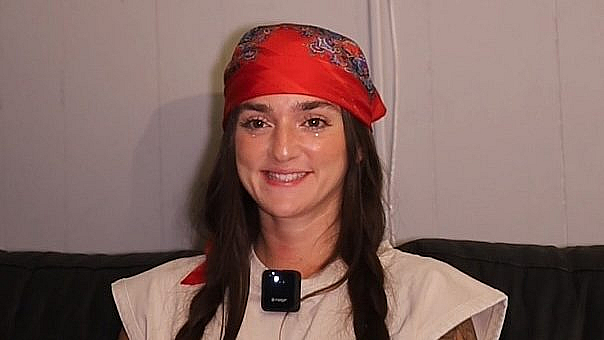
Zingara has officially renamed her upcoming headlining run “The Aliens Are Making Sounds Tour” after criticism surrounding its original title and supporting lineup escalated into alleged threats and doxxing.
The bass music artist’s newly announced headlining run will now move forward as The Aliens Are Making Sounds Tour after a debate over genre, representation, and its supporting lineup escalated far beyond ordinary criticism.
Zingara’s latest headlining tour entered the public conversation with a playful name connected to one of her most recognizable releases. Within days, however, that announcement became the center of a much larger debate about genre labels, women’s representation in bass music, fan accountability, and the increasingly intense pressure online audiences can place on artists.
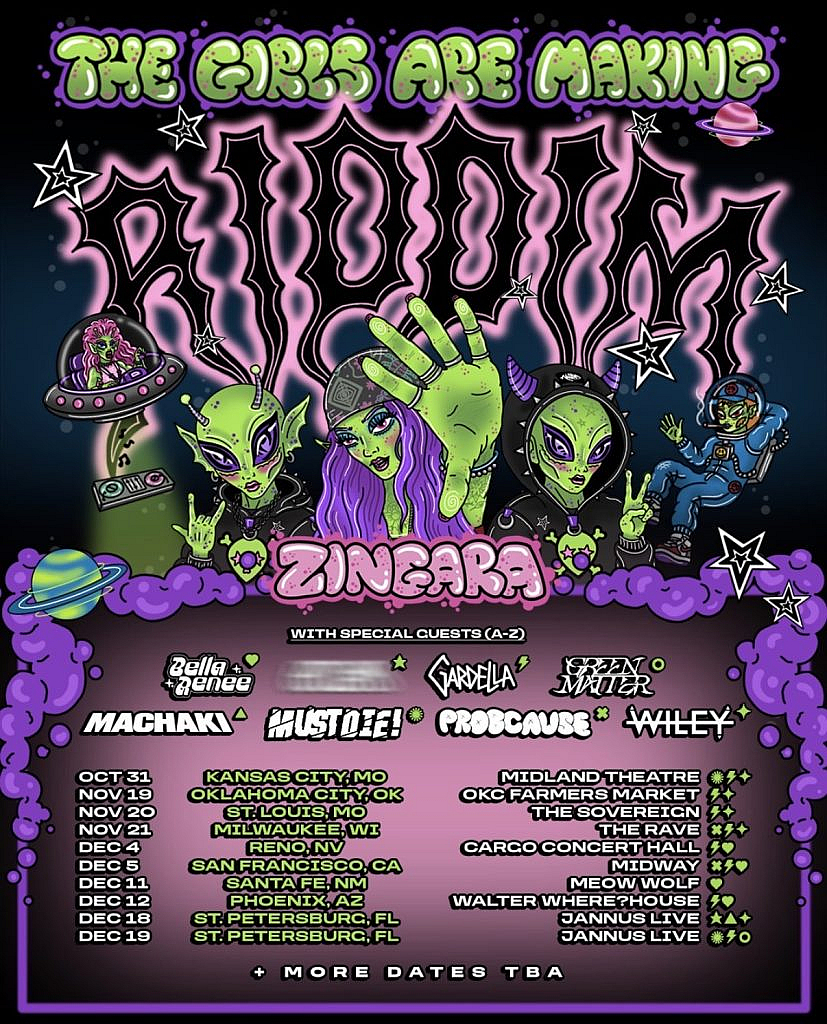
Initially announced on July 13 as The Girls Are Making Riddim Tour, the run takes its original name from Zingara, Gardella, and Tweenkboosiechase’s collaborative track, “THE GIRLS ARE MAKING RIDDIM.”
The tour will feature rotating support from artists including Bella Renee, Gardella, Green Matter, Machaki, MUST DIE!, ProbCause, and Wiley as Zingara brings the show to venues across the United States later this year.
Why the Original Tour Name Drew Criticism
Some of the earliest criticism focused on whether “THE GIRLS ARE MAKING RIDDIM” fits within the more traditional definition of riddim.
Although genre boundaries are rarely absolute, riddim is generally recognized as a stripped-down branch of dubstep built around repetitive bass patterns, minimal arrangements, syncopated percussion, negative space, and subtle variations within a consistent groove. The sound developed from the darker and more spacious roots of early UK dubstep before becoming increasingly prominent in the United States during the mid-2010s.
To listeners who closely identify with that history, the term carries a more specific meaning than simply describing any heavy bass record. Some argued that Zingara’s song exists closer to the broader world of modern dubstep and experimental bass than the narrower sound traditionally associated with riddim.
That debate was not entirely new. The song had already been available for months without generating controversy on the same scale. The conversation intensified when its title became the identity of an entire headlining tour.
The Supporting Lineup Became the Larger Issue
The deeper criticism was less about genre classification and more about what the phrase The Girls Are Making Riddim appeared to communicate.
A vocal portion of the community interpreted the title as the framing for a women-centered tour or a broader celebration of women producing heavy bass music. When the supporting artists were announced, listeners pointed to the inclusion of multiple male performers and argued that the final roster did not reflect that implied message as strongly as it could have.
That criticism is not entirely unreasonable. When a tour uses language that appears to center a particular community, audiences will naturally evaluate whether its booking choices support that framing. The bass scene includes numerous women producing riddim, dubstep, experimental bass, and adjacent styles who could fit within such a concept.
At the same time, a touring lineup is rarely assembled from creative preference alone. Artist availability, routing, budgets, agency relationships, venue markets, existing commitments, and scheduling conflicts can all influence which performers are able to join particular dates. Without access to those internal conversations, it would be unfair to claim that every supporting decision represented an intentional rejection of women in the scene.
There was room for a worthwhile conversation about representation and whether the branding matched the bill. Unfortunately, that conversation did not remain within reasonable boundaries.
Zingara Reports Threats and Exposure of Private Information
As the backlash intensified, Zingara addressed the situation through her Instagram Story and said the response had escalated beyond criticism of a tour poster.
“This scene clearly has a lot of toxic energy in it. We’re getting death threats, sending our address.”
Zingara’s wording appeared to refer to people circulating or sending her private address, conduct commonly described as doxxing.
Doxxing is the act of gathering and exposing someone’s personally identifiable or private information without consent, commonly with the intention of intimidating, harassing, or placing that person at risk. Depending on the circumstances and jurisdiction, doxxing may intersect with laws addressing stalking, threats, harassment, identity theft, unlawful computer access, or the malicious distribution of protected personal information.
Genre disagreements and criticism of tour representation belong within normal music discussion. Death threats and the exposure of private information do not. No argument about a tour title, supporting roster, or definition of riddim justifies creating a legitimate safety concern for an artist or anyone on their team.
“The Aliens Are Making Sounds” Becomes the Official Tour
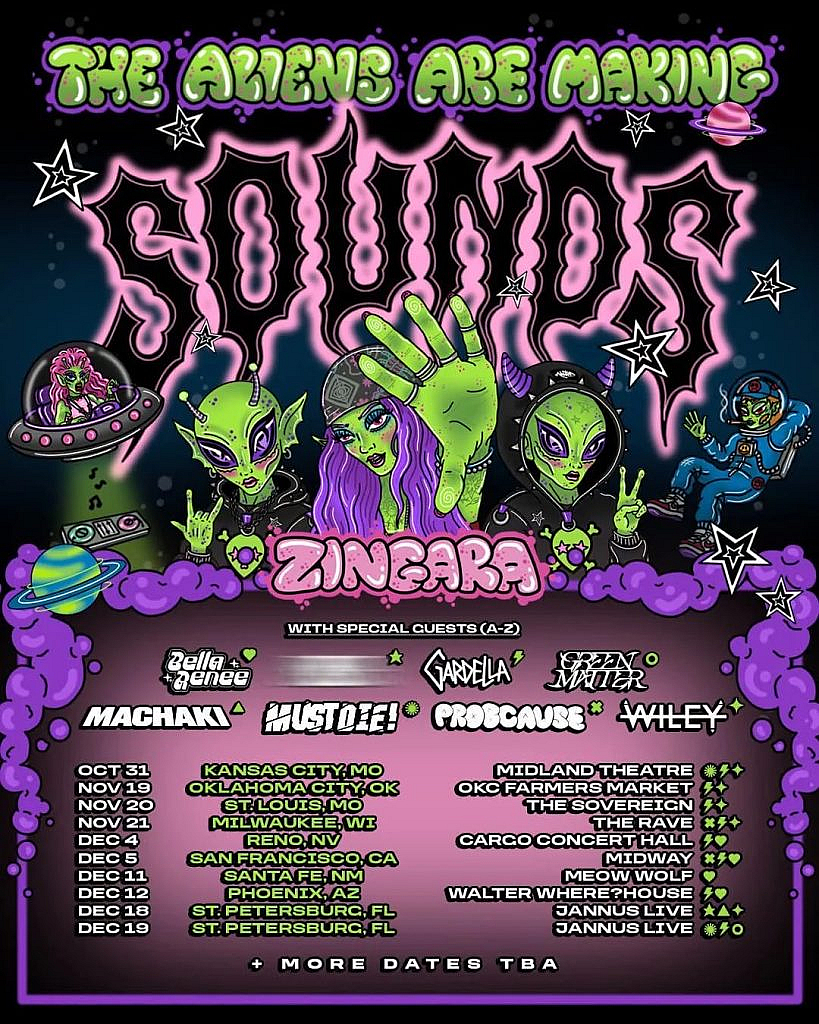
Following the backlash, Zingara and her team officially retired the original tour branding and replaced it with The Aliens Are Making Sounds Tour.
Zingara introduced the change online with the stylized title “ThE ALiEnZz ArE MaKinG SoUndZzzZzz,” while current venue and ticketing listings use the cleaner official name The Aliens Are Making Sounds Tour.
In her statement announcing the change, Zingara thanked the community members who had sent her support and explained that she believed renaming the tour was the best way to move forward with love and positivity.
She emphasized that the original purpose of the tour had not changed: creating music, having fun with friends and collaborators, and bringing uplifting energy to the community. Zingara also acknowledged that she still had more to process and discuss after everything that had occurred.
She separately apologized to women in the scene who felt hurt or excluded by the original supporting lineup and the expectations created by its branding.
Other Bass Artists Publicly Support Zingara
Several artists within the electronic music community responded publicly after the rebrand.
Mersiv emphasized the months of planning required to build and route a tour, while expressing disappointment that the conflict had reached a point where its identity had to be changed.
Ravenscoon argued that the situation had been taken far out of proportion and pointed toward Zingara’s history of supporting women, friends, and underground artists within the bass community.
Levity approached the new alien concept with humor while still acknowledging that the behavior directed toward Zingara had crossed a line.
Their reactions shared a common message that criticism can be discussed, but harassment and intimidation actively damage the community people claim to be protecting.
Tempo Setter’s Take: Criticism Is Not Ownership
This situation contains two truths that do not cancel each other out.
First, the original criticism raised a fair question. If a tour is called The Girls Are Making Riddim, audiences are going to expect the lineup to meaningfully reflect both “the girls” and, to some extent, “riddim.” The title created expectations that extended beyond its origin as a song name. Listeners were not wrong to notice a disconnect between the message they interpreted and the bill they were shown.
Artists and their teams are not exempt from feedback simply because a project is creative. Branding communicates an idea, and audiences are allowed to question whether the final execution supports that idea.
But criticism does not give an audience ownership over an artist.
Once the response becomes threatening, invasive, or designed to frighten someone into compliance, it stops being accountability. It becomes coercion.
Fans can challenge a decision without acting as though an artist’s career belongs to them. They can advocate for women in bass music by buying their music, attending their shows, sharing their work, recommending them to promoters, and creating constructive discussions about bookings. Sending threats or exposing private information does nothing to build the healthier and more inclusive scene those actions supposedly defend.
There is also an uncomfortable precedent created when harassment succeeds. If an online campaign becomes severe enough to force an artist to discard months of branding and planning, it teaches the loudest and most aggressive voices that intimidation is an effective tool for directing creative decisions.
That does not mean the original concept was beyond criticism. It means criticism must have a boundary.
Creative freedom does not shield artists from accountability, and accountability does not grant audiences the right to impose a veto through fear.
A New Name, but the Same Tour Energy
Now moving forward as The Aliens Are Making Sounds Tour, Zingara’s headlining run will continue with its announced rotating guests and its extraterrestrial visual identity intact.
In some ways, the revised title may fit the project more broadly. It removes the genre argument, avoids creating a gender-specific expectation around every supporting slot, and connects naturally with the alien imagery that has long existed throughout Zingara’s creative world.
Whether the rebrand fully closes the controversy remains to be seen. What should already be settled is that no disagreement about electronic music deserves threats, harassment, or the exposure of someone’s home address.
The bass community has always taken pride in presenting itself as a place of belonging. Maintaining that identity requires more than repeating messages about peace, love, unity, and respect when the music is playing. It also requires practicing those principles when disagreement becomes uncomfortable.
Check out Legendary Life’s Interview with Zingara
View this post on Instagram
Follow @zingaramusic for official tour updates and @LegendaryLifeMusic / @Tempo.Setter for continued electronic music news, interviews, and festival coverage.
About The Author