
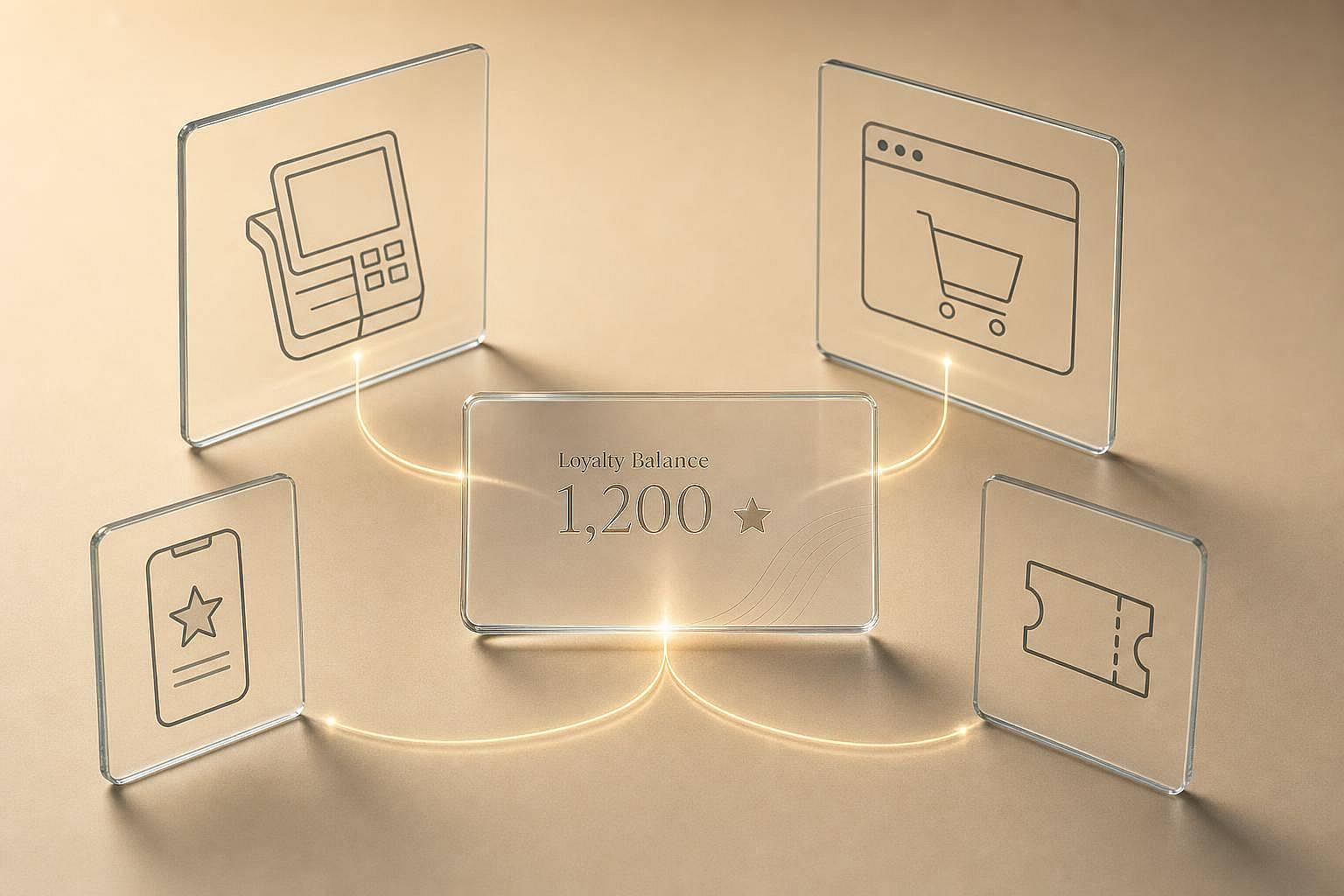
If your loyalty program shows one points balance online and another in-store, it is already losing trust. I’d fix that by linking every touchpoint to one customer profile, one reward balance, and one set of rules across POS, ecommerce, mobile, messaging, and events.
Here’s the short version:
- Unify customer data first. A loyalty program works best when purchases, app activity, event attendance, and preferences feed into the same profile.
- Connect the top channels first. I’d start with POS, ecommerce, and mobile, because that’s where most earning and redemption happen.
- Use real-time updates where customers can see them. If someone checks out in-store, their points and tier status should reflect that right away.
- Keep rewards simple. Clear offers like “500 points = $5 off” are easier to use and easier to trust.
- Personalize by behavior. Omnichannel shoppers buy 70% more often, and personalization can drive a 46% increase in spending.
- Set rules early. Consent, profile matching, deduplication, and team ownership should be set before launch.
- Pilot before full rollout. Test reward logic, sync issues, and message timing with a smaller group first.
A few numbers make the case clear:
- 91% of consumers now shop across more than one channel
- Brands with unified commerce see 1.5x higher customer lifetime value
- Starbucks loyalty members drive nearly 60% of U.S. company-operated revenue
- More than $13 billion in Starbucks member spend shows what linked loyalty can do at scale
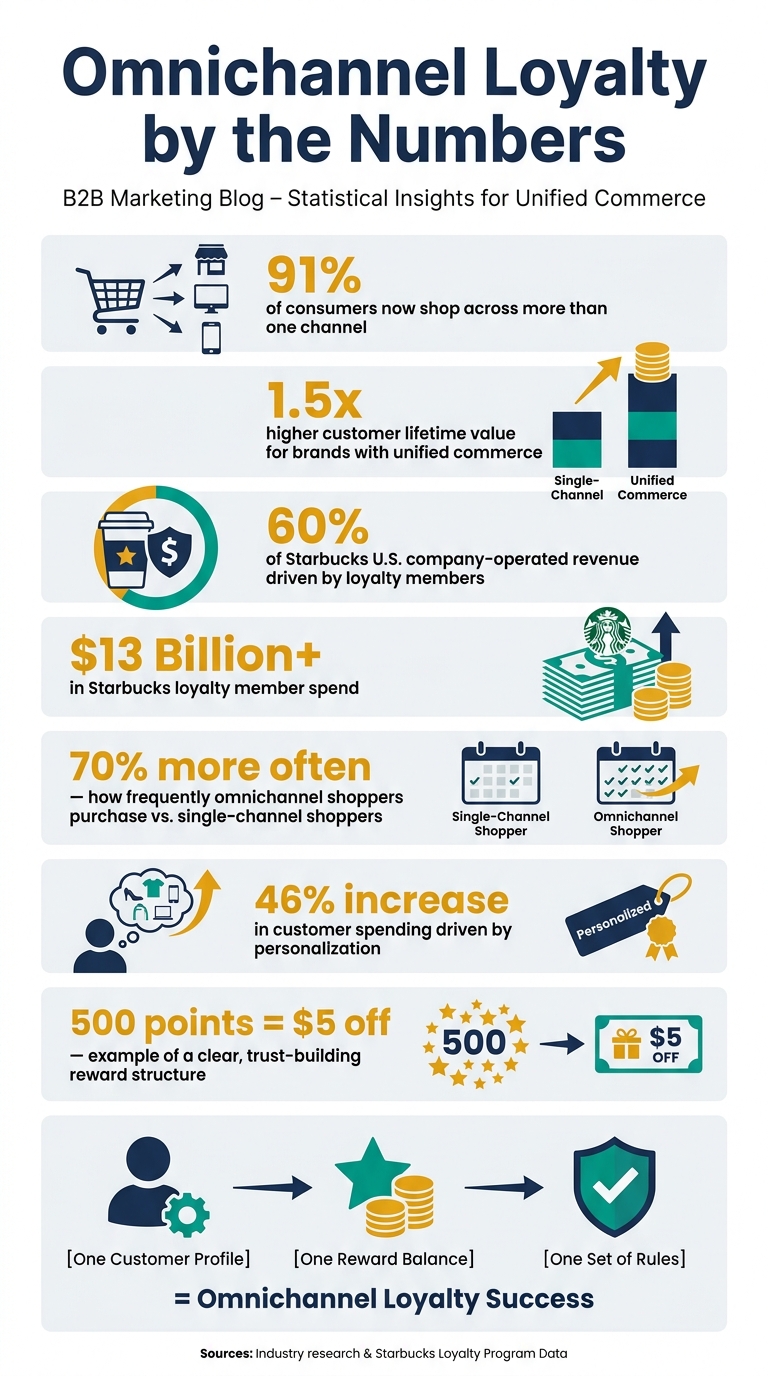
Omnichannel Loyalty by the Numbers: Why Unified Programs Win
Adore Beauty’s Strategy for Omnichannel Loyalty Program Integration
sbb-itb-fc951a8
Quick Comparison
| Area | What I’d Do | Why It Matters |
|---|---|---|
| Customer data | Build one shared member profile | Stops split accounts and broken reward history |
| Sync timing | Use real-time for balances and redemption | Cuts confusion at checkout |
| Core channels | Start with POS, ecommerce, mobile | Covers the highest-use touchpoints |
| Messaging | Trigger email, SMS, and push from member actions | Makes loyalty messages timely |
| Rewards | Use points, tiers, and experience-based perks | Gives short-term and long-term reasons to stay |
| Measurement | Track enrollment, active members, redemption, AOV, and CLV | Shows whether the program changes behavior |
So if I had to sum up the article in one line, it would be this: omnichannel loyalty works when data, rewards, and customer touchpoints all act like one brand instead of separate systems.
Build the Customer Data Foundation and Loyalty Tech Stack
Omnichannel loyalty starts with one customer record, not one rewards engine.
What holds it all together is a unified data layer: one shared base that pulls first-party transaction data, zero-party preferences, and identity data into the same member record. If that layer isn’t in place, the data splinters all over again. So the stack has to unify identity first. Only then can rewards logic and messaging do their jobs.
Define the Roles of CDP, CRM, and Loyalty Platform
Each system needs a clear lane. When teams blur those roles, they end up with overlap, duplicate data, and systems working against each other.
| System | Primary Purpose | Data Handled | Main Users | Integration Role |
|---|---|---|---|---|
| CDP | Profile unification | Behavioral, transactional, identity | Data analysts, marketers | Unified data layer and source of truth for member identity |
| CRM | Relationship management | Contact info, email/SMS history, support notes | Marketing, support teams | Orchestrates engagement journeys |
| Loyalty Platform | Rewards logic | Points, tiers, redemption rules | Loyalty managers | Calculates and triggers reward eligibility |
| Marketing Automation | Engagement delivery | Email/SMS triggers, campaign flows | Marketing teams | Sends personalized loyalty messages |
| POS / Ecommerce | Transaction capture | SKU-level sales, checkout data | Store associates, ecommerce teams | The front-end where members earn and redeem rewards |
Put simply, the CDP unifies identity, the loyalty platform applies the rules, and the CRM sends the message.
Batch vs. Real-Time Data Synchronization: How to Choose
Some data syncs can wait. Others can’t.
If a member checks out and sees the wrong balance, or a mobile reward doesn’t match what happened in-store, trust drops fast. Those are common loyalty failures.
| Feature | Batch Sync | Real-Time Sync |
|---|---|---|
| Speed | Delayed (e.g., nightly) | Instant or near-instant |
| Complexity | Lower; easier to set up | Higher; requires robust APIs and webhooks |
| Infrastructure Cost | Lower overhead | Higher; requires event-driven architecture |
| Customer Experience | Risk of broken experiences if balance lags | High; enables instant gratification and trust |
| Best Use Case | Deep analytics, nightly reporting | Checkout redemption, mobile balances, triggered SMS |
A good rule of thumb: if the customer can see it right now, the system should update right now too. That’s why an API-first, event-driven setup makes sense for things like point balance updates after an in-store purchase.
Batch sync still has its place. It works well for back-end reporting and profile enrichment that doesn’t need to happen on the spot.
Set Privacy, Consent, and Data Quality Rules Early
Consent for email, SMS, and push notifications should be built into the loyalty sign-up flow from day one, not bolted on later. Members should also be able to manage those permissions inside their loyalty profile.
Identity resolution matters just as much. If a shopper uses a phone number in-store and an email in the app, both actions should connect to one record, not two. When profiles split, reward history splits with them. That’s where frustration starts. Set deduplication rules before the first transaction moves through the system.
Once those data rules are set, the next move is tying together the channels customers use most.
Connect the Highest-Impact Channels First
Once your data setup is in place, start with POS, ecommerce, and mobile. Those three channels usually give you the fastest route to one loyalty system for earning and redemption. If identity and consent are already set, the next move is simple: focus on the places where most transactions happen.
Integrate POS, Ecommerce, and Mobile for Earning and Redemption
The goal is simple: a customer should be able to earn points in-store and redeem them online without calling support.
At the POS, identify members by phone number, QR code, mobile wallet pass, or app login, and train staff to confirm point accrual in real time. If a store loses connectivity, queue accrual by phone number and sync it once service comes back. Starbucks Rewards is a strong benchmark here. By building mobile ordering, payment, and star accrual into one app flow, loyalty members now drive nearly 60% of U.S. company-operated revenue, with more than $13 billion in spend.
Once that transaction loop is working, your messaging can start turning purchases into repeat visits.
Use Email, SMS, and Push for Triggered Loyalty Journeys
Use email, SMS, and push to trigger loyalty events, not generic promotions.
A new member should get a welcome flow that shows how earning and redemption work. A member who just reached a tier threshold should get a milestone alert that same day. If a reward expires in seven days, send a reminder, not a newsletter. That timing matters. Each message is tied to something the customer did, so it feels timely instead of annoying.
After those transaction-based triggers are live, carry that same member profile into nonpurchase engagement.
Add Events and Community Touchpoints to Deepen Engagement
Transactions show what customers buy. Events and community activity show why they come back.
Workshop attendance, community participation, or engagement with editorial content can all feed the loyalty profile and unlock rewards that points by themselves can’t deliver. Brands like The North Face and Lululemon show how this can work well. Non-monetary rewards such as “Field Testing” new gear or free hemming services build loyalty without leaning on discounts.
Feed event attendance and content engagement into the same member record used for POS and ecommerce. For Legendary Life Media, that means tying article engagement and event attendance to one loyalty profile, then using that profile to unlock exclusive merchandise or exclusive experiences.
The table below shows how each channel fits into the broader integration picture, including the loyalty actions it supports and the KPIs that show whether it’s working:
| Channel | Loyalty Actions | Required Integrations | KPIs |
|---|---|---|---|
| POS (In-Store) | Member ID (QR/phone), point accrual, reward redemption | POS API, real-time CRM sync | Redemption rate, Average Order Value (AOV) |
| Ecommerce | Point balance visibility, one-click redemption, personalized offers | Webhooks, e-com platform (e.g., Shopify) to LMS | Conversion rate, repeat purchase rate |
| Mobile App | Digital wallet pass, push alerts, balance check | SDK/API to CRM and LMS | Monthly active users (MAU), app-driven revenue |
| Email/SMS/Push | Welcome flows, milestone alerts, win-back campaigns, expiration reminders | ESP/SMS gateway, CDP | Click-through rate (CTR), churn reduction |
| Events/Community | Experiential rewards, community badges, exclusive access | Event management software, social APIs | NPS, brand advocacy |
Design Rewards and Personalization for Cross-Channel Behavior
With the plumbing in place, shift to the incentive model. Once your channels are connected, reward rules need to work across all of them. If a customer earns in one place, they should be able to redeem in another with no hassle.
Start with a reward setup you can explain in a single sentence.
Choose a Reward Structure Customers Can Understand Quickly
A hybrid model often works best: points for actions, tiers for retention, and experiences for long-term loyalty.
Sephora’s Beauty Insider is a good example of how a simple tier system can drive repeat behavior at scale. Tiers give people something to aim for. That status goal can be a strong nudge to come back.
Lead with benefits people get right away, like “500 points = $5 off”. Keep the main setup simple, then leave the extra detail for the fine print.
Personalize Offers Using Behavior Across Channels
Unified data should shape offers based on behavior. Event attendees, online browsers, app users, and in-store buyers shouldn’t all get the same message. Purchases, browsing behavior, app activity, event attendance, and content engagement should all guide the offers and journeys each person sees.
Adidas adiClub rewards members for more than buying. Members can earn through actions like filling out profiles, leaving reviews, and attending brand events. That helps build loyal customers, not just repeat buyers. Mobile apps also help connect channels by letting members track balances, get location-based offers, and scan barcodes in store.
Personalization can drive an average 46% increase in customer spending. The key is timing and context, especially for location-based offers. A discount sent at the right moment can do a lot more than a generic promo blasted to everyone.
Once offers are tied to behavior, the next step is simple: check whether they change spending and repeat visits.
Measure Reward Economics and Customer Response
To know if your reward setup is working, track the numbers that matter. Focus on redemption rate, repeat purchase rate, AOV, and conversions shaped by more than one touchpoint.
The table below compares reward types across the metrics that matter most for omnichannel programs:
| Reward Type | Perceived Value | Business Cost | Omnichannel Delivery Ease | Best-Fit Audience |
|---|---|---|---|---|
| Monetary (Points/Cashback) | High (Immediate) | High (Margin impact) | Easy (Digital/POS sync) | Mass market/Price-sensitive |
| Experiential (Events/VIP Access) | Very High (Status) | Moderate (Logistics) | Moderate (Requires booking) | High-tier members, brand advocates |
| Content-Based (Exclusive Guides) | Medium (Utility) | Low (Scalable) | Very Easy (Digital delivery) | New users/Niche enthusiasts |
| Hybrid (Tiers + Perks) | Highest (Status) | Variable | High (Unified Hub) | High-Value Segments |
Track results, but don’t rush to change the program before you have enough data to judge it. Use these metrics as your baseline for testing and optimization.
Governance, Testing, and Continuous Optimization
Once rewards go live, the work changes. Now it’s about who owns what, how you control rollout, and how you measure what happens next.
Post-launch loyalty needs clear owners, clear service levels, and a set review rhythm. If that part is fuzzy, small issues can turn into a mess fast.
Assign Owners and Service Levels Across Teams
Each team should have a defined job. When something breaks – a points sync fails, a redemption doesn’t apply, or a member gets the wrong offer – there shouldn’t be any confusion about who steps in.
| Team | Primary Responsibilities |
|---|---|
| Marketing | Campaigns and triggered journeys |
| Product | Loyalty rules and UX |
| Engineering | Integrations and security |
| Data | Identity and reporting |
| Operations | In-store execution and training |
| Support | Issue resolution and adjustments |
Once ownership is set, start with a controlled pilot instead of opening the program to everyone at once.
Test in Phases Before a Full US Rollout
Run a controlled pilot before launching at scale. A limited rollout helps you spot integration failures and confusing reward mechanics early, before they hit your full member base.
Loyalty usually needs time to show ROI. That’s why A/B tests matter. Use them to compare reward thresholds, perks, and message timing. Member feedback also helps surface friction points.
Use the pilot period to fix what slows people down before you expand access.
Track Program Health and Adjust
Judge results by member behavior, not just campaign volume.
Once the program is live, these are the metrics worth close attention:
| Metric | Calculation / Focus | Review Cadence |
|---|---|---|
| Enrollment Rate | % of customers joining the program | Monthly |
| Active Member Rate | % of members engaging/buying in 90 days | Monthly |
| Redemption Rate | % of issued points/rewards actually used | Quarterly |
| Incremental Member Revenue | Revenue from members vs. non-members | Quarterly |
| Omnichannel CLV | Total value of members using more than one channel | Twice a year |
| Unused Reward Value | Value of expired or unredeemed rewards | Annually |
Loyalty isn’t a one-and-done launch. The programs that last keep making changes based on actual member behavior, not guesses.
Bring ownership together, pilot first, measure cross-channel behavior, and keep improving from what the data shows.
FAQs
What systems should we integrate first?
Start by bringing customer data and point tracking together across every touchpoint. Connect your e-commerce platform and in-store POS systems first, so customers can earn and redeem points in real time whether they shop online or in person.
Once that base is set, add mobile wallet features or a dedicated app to make the experience smoother and easier to use.
Do loyalty balances need real-time updates?
Yes. Real-time updates matter for a smooth omnichannel loyalty experience. If a customer makes an in-store purchase, their loyalty balance should show up in their mobile app within minutes.
When updates stay accurate across every touchpoint, both online and offline, the experience feels connected instead of broken. That helps keep customer trust intact.
How do we prevent duplicate member profiles?
Build your master data management approach around a Single Customer View. The goal is simple: give each customer one consistent identifier, such as a personal email address, so you can connect their interactions across every touchpoint.
It also helps to standardize, link, and de-duplicate data right at the point of entry, including account creation and web forms. That way, messy records don’t pile up from the start. Clear data governance, backed by Customer Data Stewards, keeps profiles aligned across both digital and physical channels.
Related Blog Posts
- Ultimate Guide to Personal Branding Online
- Personal Stories vs. Data: What Builds More Trust?
- Q&A: Social Media Engagement for Entrepreneurs
- Ultimate Guide to Personalized Loyalty Programs
About The Author