Entrepreneur Productivity Starts With Better Visibility
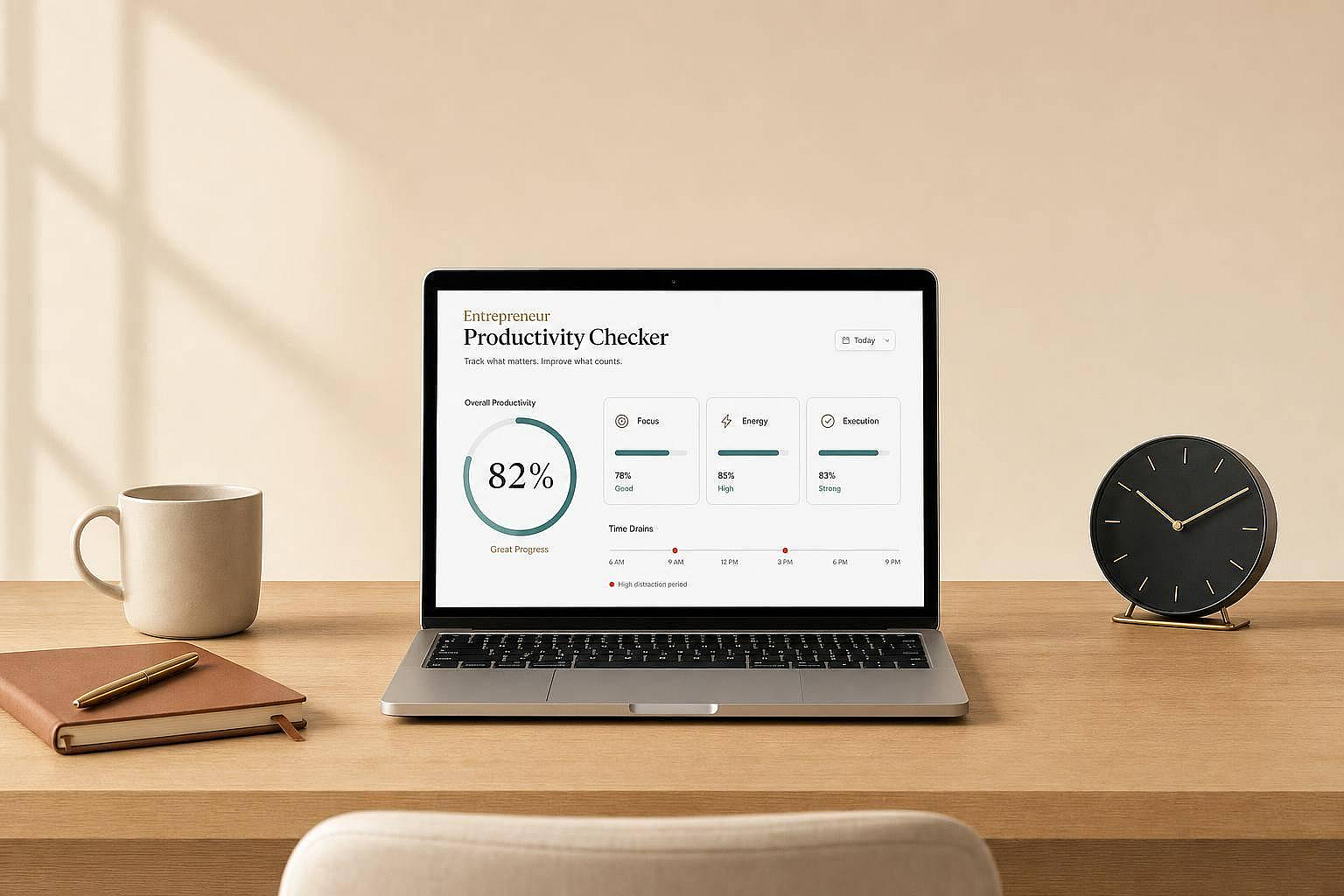
A busy day doesn’t always mean a productive one. For founders and small business owners, it’s easy to spend hours working without making real progress on the tasks that move the business forward. An Entrepreneur Productivity Checker helps close that gap by turning daily activity into something measurable and useful.
Track More Than Just Hours
This tool looks beyond time spent at your desk. It considers completed tasks, top priorities, common distractions, and your energy level, giving you a fuller picture of how your day actually went. That makes it easier to spot whether you’re being pulled into reactive work or staying focused on high-impact goals.
Turn Patterns Into Practical Changes
A strong entrepreneur productivity checker isn’t just about scoring performance. It’s about helping you work smarter. If your results show frequent interruptions, low-energy slumps, or unfinished priorities, you can make small changes that improve consistency over time. A daily productivity tracker like this gives business owners clear, supportive feedback they can act on right away.
Used regularly, the tool can help you build stronger routines, protect focus, and make better use of your best working hours.
FAQs
How does the productivity score work?
The score looks at a few practical signals: how many meaningful tasks you completed, whether your top priorities were addressed, how your work hours align with output, and how much distractions may have affected your day. It isn’t meant to judge you. It’s designed to give you a useful snapshot that helps you make better decisions about your workflow.
Is this tool only for full-time entrepreneurs?
Not at all. It’s useful for full-time founders, side-hustle builders, freelancers, and small business owners alike. If you’re trying to manage your time, energy, and priorities more intentionally, the tool can help you spot patterns and make smarter adjustments.
What kind of suggestions will I get?
You’ll receive practical recommendations based on your inputs. For example, if distractions are high, the tool may suggest time blocking, batching messages, or setting a shorter focus window. If energy is low, it may point toward task sequencing, breaks, or scheduling demanding work during your strongest hours.
About The Author