
Fiji Airways Review: The Airline That Remembers Flying Is Supposed to Feel Good
There was a time when flying somewhere felt like the beginning of the trip. You dressed a little better, somebody smiled when you boarded and the experience carried at least a trace of occasion. Somewhere along the way, much of commercial aviation became an exercise in industrial human transport. Seats got tighter, cabins got fuller, service became increasingly automated and passengers became reservation numbers attached to credit cards. The miracle of crossing an ocean in a few hours survived. Much of the romance did not.
Then there is Fiji Airways.
This Fiji Airways review begins with something that doesn’t show up on a seat map or fare comparison: the airline actually feels like the country whose name is painted across the fuselage. Fiji Airways isn’t the world’s biggest carrier, doesn’t fly everywhere and doesn’t operate an enormous collection of international hubs. What it does remarkably well is something many larger airlines have spent billions trying to manufacture through branding consultants and customer-experience programs: it makes you feel genuinely welcome.
That distinction seems trivial until you have spent enough time flying airlines where hospitality increasingly feels like corporate procedure.
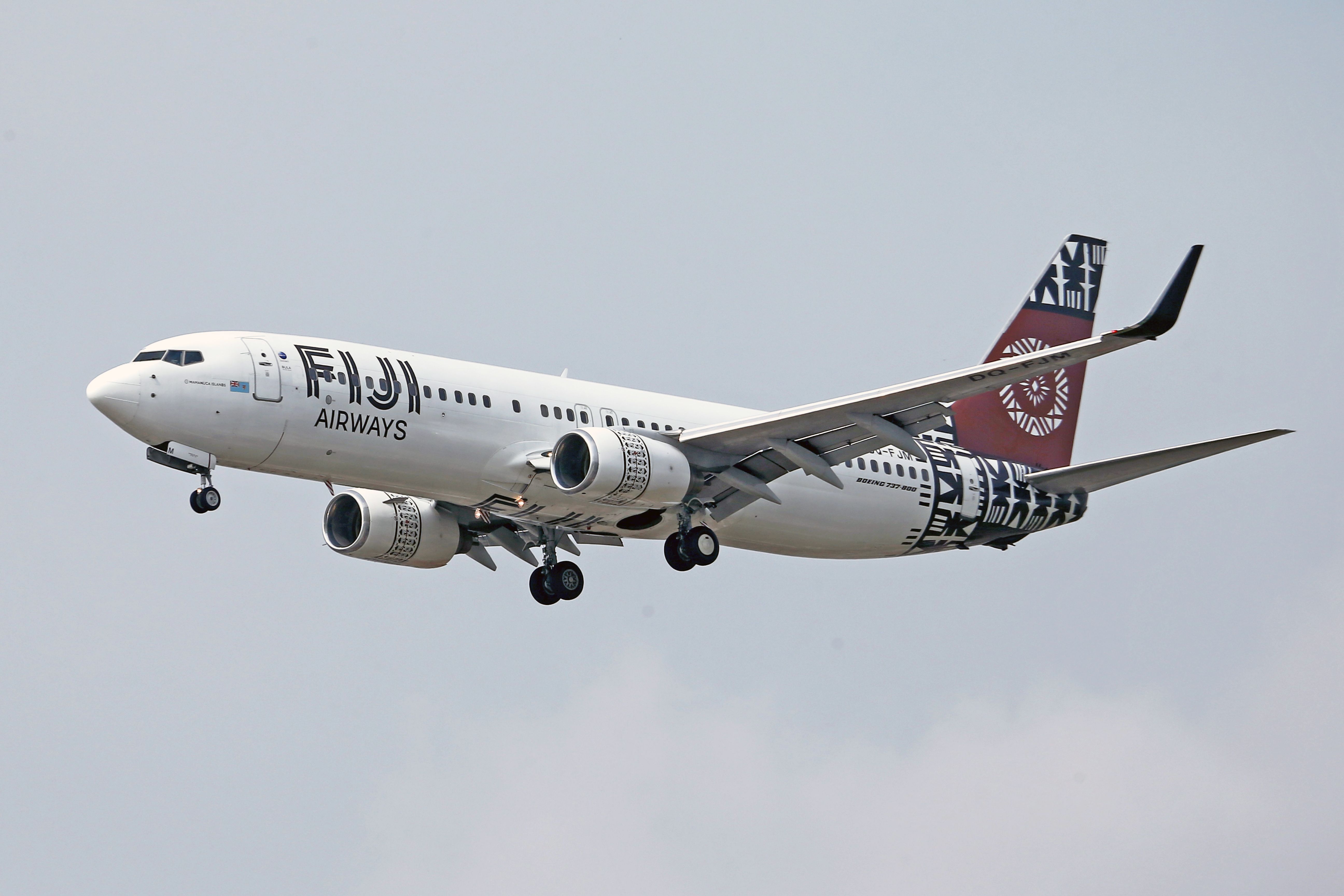
Fiji Airways is the flag carrier of a small island nation sitting in the middle of an enormous ocean, and somehow that limitation has become part of its charm. The airline doesn’t feel like a transportation conglomerate that happens to have Fiji painted on its airplanes. From the Bula greeting when you step aboard to Pacific-inspired food, traditional design influences and the easy warmth of the cabin crew, the destination begins somewhere over the Pacific rather than at baggage claim.
Fiji Airways Review: The Lost Art of Hospitality
Spend enough time on mainstream airlines and you begin lowering your expectations without realizing it. You stop expecting warmth and become grateful for competence. A clean seat is good. An on-time departure is excellent. A flight attendant who doesn’t seem irritated by your existence feels almost luxurious.
Fiji Airways operates from a different cultural starting point. Bula is the word visitors hear everywhere in Fiji, but translating it simply as “hello” misses most of the point. It carries an atmosphere of welcome, life and goodwill that is difficult to manufacture. Fiji Airways has managed to weave that Bula Spirit into the passenger experience in a way that can make flying feel noticeably less transactional.
Hospitality cannot be entirely engineered through a training manual. Airlines can teach procedures, posture and vocabulary. They can require employees to say particular phrases. What they cannot easily manufacture is a culture where welcoming strangers comes naturally. Fiji has that advantage before the airplane ever leaves the ground, and Fiji Airways is at its best when it simply lets that personality come through.
The result isn’t white-glove theater. It is arguably better than that. Service feels relaxed without becoming sloppy and attentive without becoming intrusive. In an industry obsessed with automating every possible interaction, there is something refreshingly old-fashioned about simply being treated like a person.
Is Fiji Airways a Good Airline?
The short answer is yes, particularly for travelers crossing the Pacific or visiting Fiji. The more interesting answer is why.
The aviation industry has spent decades worshipping scale: bigger networks, bigger alliances, bigger airports and more aircraft moving more passengers through increasingly complicated systems. There are obvious advantages. If something goes wrong at a giant hub, a major airline may have several more departures available that afternoon. Fiji Airways cannot always compete with that kind of redundancy, and its smaller route network is an important consideration when booking.
But scale has a price.
A mega-hub at rush hour can feel less like travel than an evacuation. You walk half a mile, ride a train, walk another half mile, stand in a line, scan something, remove something, repack something and eventually arrive at a gate surrounded by hundreds of equally irritated people staring at their phones.
Then you connect through Nadi.
Nadi International Airport is Fiji’s international gateway, but compared with the sprawling machinery of the world’s largest hubs, it remains remarkably manageable. Fiji Airways has built its network around Nadi, connecting Fiji with North America, Australia, New Zealand and destinations throughout the South Pacific.
You get off the airplane and can actually understand where you are.
It is amazing how premium simplicity starts feeling once the rest of the world becomes sufficiently complicated.
Fiji Airways A350 Review: The Airplane Matters
Warm smiles would mean considerably less if you had to endure a long Pacific crossing inside a miserable airplane.
Fortunately, Fiji Airways has invested in modern long-haul aircraft, including the Airbus A350-900 alongside Airbus A330s, with Boeing 737 MAX aircraft serving other routes. The A350 in particular is exactly the kind of machine you want beneath you while crossing the Pacific: quiet, modern and designed to make very long flights somewhat less punishing.
This is one area where a Fiji Airways review has to go beyond service. Aircraft type can dramatically change a long-haul experience, and travelers booking Fiji Airways should pay attention to the equipment scheduled for their particular flight.
The A350 is the aircraft to look for when available.
Fiji Airways Economy Class Review
Economy is still economy. Nobody should pretend a long-haul coach seat has suddenly become a private villa in Savusavu. But there is a meaningful difference between an airline treating Economy passengers as customers and treating them as payload.
Fiji Airways Economy Class benefits from thoughtful service, personal entertainment on long-haul aircraft, charging options, meals and cabin crews that continue circulating rather than disappearing for most of the flight. The original review particularly noted that the airline doesn’t reserve all of its hospitality for passengers sitting behind the premium-cabin curtain.
For American travelers accustomed to increasingly stripped-down domestic flying, the contrast can be immediate. Nobody is carrying you aboard on a throne. You are simply being looked after competently and pleasantly, which says something unfortunate about how low the industry’s bar has fallen.
If you’re considering Fiji Airways Economy for a trans-Pacific trip, the appeal isn’t extravagant luxury. It is that the experience still feels reasonably civilized.
Fiji Airways Business Class Review
Fiji Airways Business Class moves into genuinely serious long-haul territory aboard the Airbus A350, with fully lie-flat seating, greater privacy, bedding and a quieter, more refined cabin experience.
Yet the same personality remains.
Fiji Airways doesn’t seem desperate to convince you how luxurious it is. There is relatively little of the overwrought ceremony some premium carriers use to remind passengers they purchased an expensive ticket. You sit down, somebody takes care of you, you eat, have a drink and eventually your seat becomes a bed somewhere above the Pacific.
That’s luxury enough.
For travelers deciding whether Fiji Airways Business Class is worth it, the value becomes most apparent on the longest overnight sectors. A lie-flat seat fundamentally changes what happens when you arrive. Instead of losing the first day of an expensive vacation recovering from the flight, you have at least a fighting chance of getting off the airplane resembling a functioning human being.
Fiji Airways Food and In-Flight Experience
Nobody boards an airplane expecting culinary transcendence. Altitude is cruel to food, catering logistics are brutal and most airline meals exist somewhere between necessity and apology.
Fiji Airways at least makes an effort to connect dining with destination. Pacific seafood, tropical ingredients, coconut and Fijian influences can appear alongside familiar international choices, with the experience becoming more elaborate in Business Class.
That may sound like a small detail, but small details are what distinguish travel from transportation. You could serve everyone the same generic chicken dish assembled according to an international catering spreadsheet. It would probably be cheaper and easier. Or you could use the meal to remind passengers where they are going.
One approach moves bodies.
The other creates anticipation.
Fiji Airways Feels Like Fiji
One of globalization’s great disappointments is that we made the world accessible and then started making everywhere look the same.
Airports contain the same luxury boutiques. Hotels adopt the same neutral interiors. Restaurants chase the same trends. International airlines increasingly converge around the same polished aesthetic until you could wake up inside a premium cabin and need to look at the safety card to remember which carrier you boarded.
Fiji Airways resists that anonymity.
Traditional Fijian masi design influences its visual identity. Pacific aesthetics appear throughout the experience. Food incorporates regional influences. The greetings, music and atmosphere remind you that this airplane belongs to a particular place and culture.
That is exactly what a national airline should do.
Travel should contain geography. It should occasionally remind you that you have actually gone somewhere.
There is a moment on a good Fiji Airways flight when the South Pacific stops being an abstract blue section of a map and begins becoming real. Maybe it happens over dinner. Maybe during a conversation with the crew. Maybe you wake up, raise the window shade and see an almost absurd amount of ocean beneath you.
The vacation has quietly started before you land.
Flying Fiji Airways Through Nadi
Look at a map and Fiji’s usefulness as an aviation hub becomes obvious. Sitting in the South Pacific, Nadi provides a natural gateway between North America, Australia, New Zealand and smaller Pacific island nations. Fiji Airways uses that geography to connect travelers onward to destinations including Samoa, Tonga, Vanuatu and the Solomon Islands.
For travelers heading from North America toward Australia or New Zealand, this creates an interesting alternative to treating a Pacific connection as an inconvenience to minimize.
Better yet, make Fiji part of the trip.
Spend a few days there. Swim somewhere ridiculous. Eat fish that was probably in the ocean yesterday. Drink something involving coconut. Talk to people. Get out of the airport. Then continue onward.
The stopover stops being wasted time and becomes the story you tell when you get home.
Fiji Airways Review: What Could Be Better?
The quickest way to ruin a credible airline review is to pretend everything was magical.
Fiji Airways has limitations. Its network is smaller than those of global giants. There are fewer frequencies on many routes, meaning disruptions can become more consequential. Peak leisure flights can fill quickly, and travelers beginning their journeys outside Fiji Airways’ core gateways may need another connection before reaching the airline.
There will be delays. There will occasionally be an imperfect meal, a full cabin, an inconvenient schedule or a seatmate who apparently believes shoes are optional above 30,000 feet.
It is still an airline.
But that’s exactly why Fiji Airways stands out. The interesting comparison isn’t Fiji Airways against some imaginary perfect carrier. It is Fiji Airways against what commercial flying has actually become.
By that measure, it gets an awful lot right.
Fiji Airways Review: Premium Without the Pretension
Luxury travel has developed a strange addiction to announcing itself. Gold things. Velvet ropes. Enormous logos. Elaborate tasting menus. Employees trained to perform deference with military precision. Sometimes it is spectacular. Sometimes it feels like everybody involved is trying much too hard.
Fiji Airways is more compelling when it does the opposite.
Comfortable aircraft. Clean cabins. Decent food. Good people. Relaxed professionalism. A manageable hub. A genuine sense of place. That understated approach is one of the airline’s strengths: premium without desperately needing to look premium.
There is a lesson there extending well beyond aviation. Real hospitality rarely needs to announce that you are receiving hospitality.
You simply feel welcome.
Fiji Airways Review Verdict: Is Fiji Airways Worth It?
For travelers visiting Fiji, the answer is easy: Fiji Airways should be near the top of the list. For travelers crossing between North America, Australia, New Zealand or destinations throughout the South Pacific, it deserves serious consideration as an alternative to the giant international carriers and their equally giant hubs.
Commercial aviation is an extraordinary technological achievement wrapped inside an increasingly impersonal customer experience. We complain about flying because somewhere beneath the security lines, boarding groups, baggage fees and gate changes, we still understand what it represents.
You are crossing an ocean.
That should feel like something.
Fiji Airways succeeds because it hasn’t completely separated transportation from hospitality. Its modern aircraft matter. The route network matters. The food, cabins and international partnerships matter. But those aren’t necessarily the things you remember.
What remains is the feeling.
You boarded an airplane somewhere on one side of the Pacific. Somebody smiled and said Bula. For the next several hours, the culture of a small collection of islands thousands of miles away began slowly arriving around you. By the time the wheels touch the runway at Nadi, Fiji no longer feels like somewhere you are going.
You are already there.
And in an industry that has spent decades perfecting the science of moving people, that may be the best conclusion to this Fiji Airways review: Fiji Airways still understands the art of welcoming them.
About The Author