What Can the Modern World Learn From Indigenous Tribes? The Tribe We Lost
We have never been more connected, and somehow we have never been so alone. That is the strange little joke at the center of modern life. We carry devices capable of reaching nearly anyone on Earth, yet many people do not know the name of the person living twenty feet away. We have food delivered without conversation, entertainment without gathering, work without leaving the bedroom and hundreds of digital acquaintances who would scarcely notice if we vanished tomorrow. We call this progress because the machines are impressive, the transactions are fast and nearly everything can be summoned on demand. But somewhere in the bargain, the human being became increasingly optional.
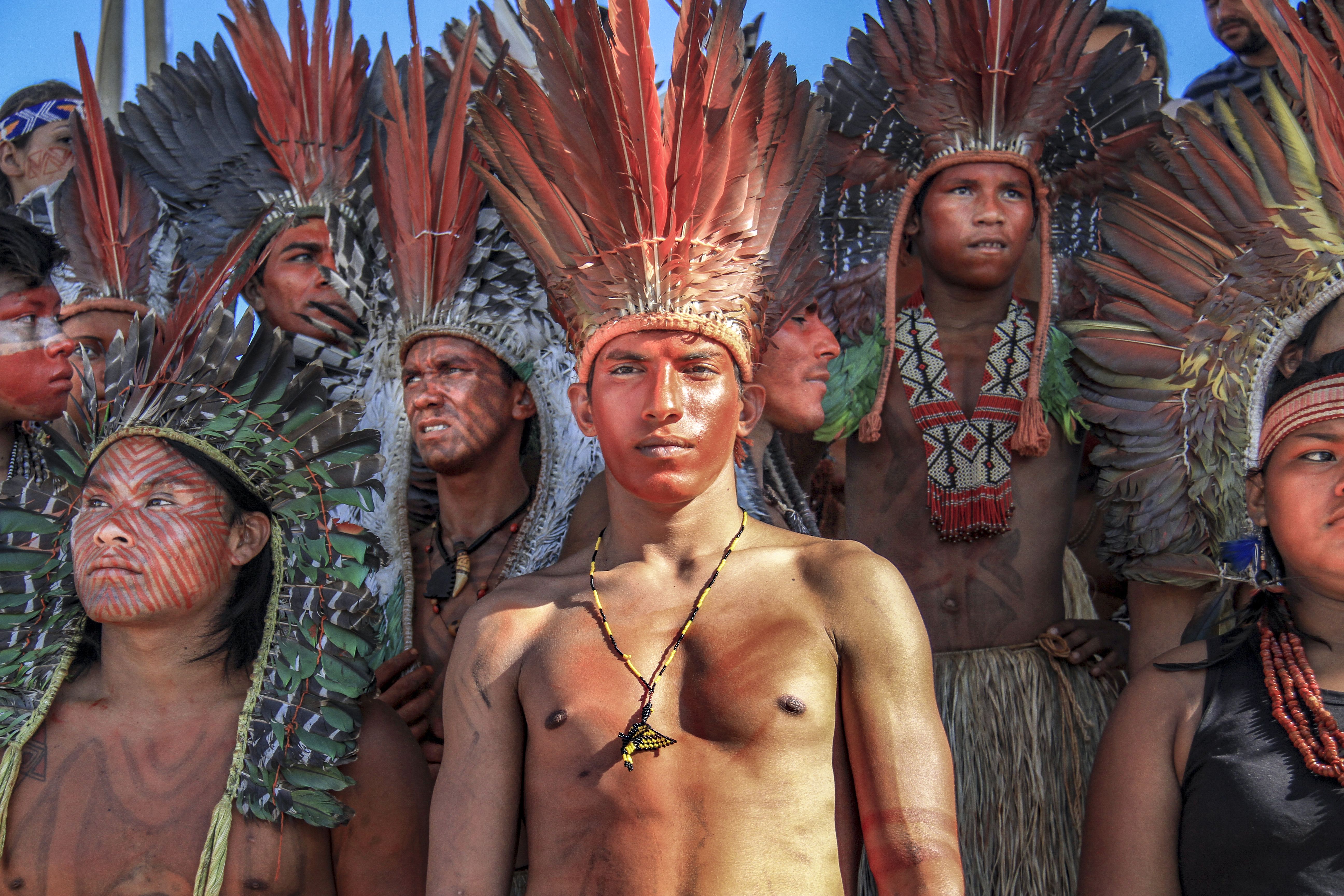
So what can the modern world learn from Indigenous tribes? Quite a lot, particularly if we are willing to look beyond romantic stereotypes and examine the social structures that have allowed Indigenous cultures to maintain community, knowledge and identity across generations. Deep in the western Amazon, the Huni Kuin offer a compelling example. They are not relics frozen in some imagined prehistoric world. They use technology, travel, organize internationally and interact with modern institutions. What remains striking is that beneath that adaptation survives something industrial society has spent generations dismantling: a social order built around people actually needing one another.
What Can the Modern World Learn From Indigenous Tribes About Community?
Modern civilization is wonderfully efficient, and that efficiency has become one of its greatest weaknesses. We have outsourced raising children, caring for elders, cooking meals, telling stories, entertaining ourselves and increasingly even listening to one another. Almost every basic human need has become something that can be purchased from a stranger. What cannot be bought nearly as easily is belonging.
Traditional societies such as the Huni Kuin have historically organized life around extended networks of family, elders, children and community. Life is not as neatly divided into the isolated compartments familiar to modern society: home, office, school, daycare, retirement home and entertainment. People repeatedly encounter one another across the entire spectrum of life. The result is not perfect harmony, but something modern individualism has increasingly lost: reciprocal dependence.
The child needs adults. Adults need one another. Parents need help. Elders eventually need physical support, while everyone benefits from the knowledge those elders accumulated before them. Dependence itself is not a weakness. Dependence without reciprocity, responsibility or meaningful relationships is the problem. One of the clearest lessons we can learn from Indigenous tribes is that a strong community is not built by eliminating our need for other people. It is built by making that need mutual.
Respecting Elders Means Preserving Human Knowledge
Modern culture worships novelty with almost religious intensity. Every device must be replaced, every trend refreshed and every worker endlessly updated. By the time someone has accumulated sixty or seventy years of lived experience, society often begins quietly moving them toward the margins.
Traditional knowledge cultures tend to recognize the absurdity in this arrangement. An elder who has watched the same forest, family or community for decades has witnessed cycles no younger person possibly could. They have seen droughts, disputes, births, deaths, failures, recoveries and mistakes repeat themselves. Among the Huni Kuin, elders continue to play an important role in transmitting songs, stories, plant knowledge, cultural practices and collective memory to younger generations. The principle is remarkably simple: wisdom that is not transmitted disappears.
Modern society has become exceptionally good at storing information and strangely careless with experience. We preserve photographs in the cloud, archive emails indefinitely and upload tutorials on almost everything imaginable, while people carrying decades of family and community history can spend their final years increasingly isolated. Then younger generations search the internet for guidance. Respecting elders does not mean pretending age makes someone infallible. It means recognizing lived experience as a form of capital and creating opportunities for that experience to move between generations.
What Indigenous Tribes Can Teach Us About Raising Children
The modern nuclear family may be one of the most punishing arrangements industrial society ever normalized. Two adults are expected to earn income, maintain a household, preserve a relationship, transport children, entertain them, educate them, discipline them and somehow remain emotionally functional. Sometimes one adult gets the entire assignment. Then society acts surprised when parents are exhausted.
Human beings appear to have evolved as cooperative child-rearers. Across many small-scale societies, children grow up around grandparents, siblings, cousins, aunts, uncles and other trusted adults who participate in their care. “It takes a village” became a cliché because for much of human history it was simply reality.
Children in these societies also spend considerable time around different generations. Younger children observe older children. Teenagers observe adults. Adults learn from elders. Knowledge moves in multiple directions. Skills are acquired through participation in everyday life: plants around plants, fishing while fishing, responsibility by being given responsibility and social behavior by spending time around people actually practicing it.
Modern education takes children of almost exactly the same age, puts them together for much of the day and largely separates learning from the adult world they are eventually expected to navigate. There are good reasons for formal schooling, but Indigenous approaches to experiential and intergenerational learning remind us that education is considerably larger than what happens inside a classroom.
A Tribe Is Not a Social Media Following
The word “community” has been stretched until it means almost anything. Brands have communities. Influencers have communities. Apps have communities. A collection of strangers clicking the same button can apparently qualify as a tribe.
But an audience is not a tribe.
Real community carries obligations. It means showing up when helping someone is inconvenient, checking on an elder, sharing food, lending tools, teaching something you know and accepting that occasionally another person’s needs will interfere with your plans. That sounds burdensome largely because modern individualism has trained us to view responsibility as something that limits freedom rather than something that creates belonging.
Traditional systems of reciprocity work precisely because they create unfinished relationships. I helped you, you helped him, his family fed mine and my uncle taught your son. Nobody needs an exact ledger because the relationship itself becomes the ledger. Modern capitalism is extraordinarily good at closing transactions: you pay, you receive, the interaction ends. Community often works in the opposite direction.
When a stranger prepares your meal because you paid for it, you received dinner. When your neighbor prepares your meal because you are sick, you received something larger. One transaction satisfies a need. The other strengthens a relationship.
Strong Tribes Give People a Reason to Matter
Another thing tribal societies can teach modern life is that human usefulness comes in many forms. Industrial society tends to reduce value to a narrow collection of measurements: income, credentials, productivity, professional status and, increasingly, visibility.
Traditional communities can recognize a much wider range of competence. Someone knows plants. Someone builds. Someone resolves arguments. Someone works exceptionally well with children. Someone remembers history. Someone organizes people. Someone prepares food. Someone tells stories. Someone knows what to do when everything goes wrong.
Not everyone has to win the same contest.
This may be one reason strong communities create a deeper sense of purpose. More people have a visible role within the group. Humans can endure remarkable hardship when they believe they matter to other people. Meaninglessness is considerably harder.
A healthy modern tribe could reclaim that principle without imitating Indigenous culture. Instead of asking only what someone does professionally, ask what they contribute. The distinction is subtle but enormous.
What the Huni Kuin Can Teach Us About Nature
Modern people talk about going “into nature,” which reveals how thoroughly we have imagined ourselves outside it. Nature has become scenery, recreation, a weekend destination and occasionally a political issue.
For peoples such as the Huni Kuin, the forest has traditionally been something fundamentally different. Human existence sits inside a network of plants, animals, rivers, weather, food, medicine, stories and generations of accumulated ecological knowledge. You do not need to adopt every aspect of Indigenous cosmology to recognize the practical intelligence embedded in that relationship.
When a forest feeds you, shelters you and supplies useful plants, destroying it does not look much like economic development. It looks like destroying the infrastructure keeping you alive.
Industrial civilization instead became remarkably comfortable treating the natural world as a warehouse attached to the economy. Trees became lumber, rivers became water supply, animals became inventory and land became an asset class. A culture that understands itself as belonging to a landscape will inevitably see that landscape differently from one convinced the landscape belongs exclusively to it.
That may be one of the most consequential lessons Indigenous societies have for the modern world: human beings are not spectators of nature. We are participants in it.
Ritual, Tradition and the Things Modern Life Threw Away
Traditional societies gather, sing, eat, tell stories, celebrate births, mourn deaths and repeat ceremonies across generations. To a civilization obsessed with novelty and efficiency, repetition can look unnecessary. In reality, repetition is one of the ways belonging becomes durable.
Ritual tells a group that certain things matter enough to keep doing.
Nobody needs to imitate sacred Huni Kuin ceremonies or borrow Indigenous identities to understand this principle. A Sunday dinner can be ritual. An annual camping trip can become ritual. Calling grandparents every week can become ritual. Cooking together, celebrating adulthood, remembering the dead or sitting around a fire retelling the same family stories can all perform similar social functions.
Community is rarely created through one spectacular gathering where everybody talks about connection. It emerges through hundreds of ordinary encounters repeated until people begin to understand that they belong to something.
Modern Individualism Gave Us Freedom—and an Exit Button
There are good reasons not to romanticize tribal societies. Small communities can become oppressive. Traditions can become rigid. Gossip can become social control. Hierarchies can become abusive. Modern civilization produced extraordinary advances in individual rights, medicine, education, mobility, scientific knowledge and personal freedom. Those achievements matter.
The mistake was believing freedom required dismantling belonging.
Modern life offers endless exits. Bad relationship? Leave. Bad neighborhood? Move. Argument online? Block. Friend becomes difficult? Unfollow. Community becomes uncomfortable? Find another one. Sometimes leaving is absolutely the right decision, particularly where relationships become harmful or abusive. But when departure becomes the automatic response to ordinary friction, nobody stays anywhere long enough to build anything resembling a tribe.
Deep relationships require tolerated inconvenience. They require forgiveness, accountability, patience and occasionally helping somebody when you would rather be doing something else. There is no app for that.
The Most Advanced Technology We Lost May Have Been the Tribe
We tend to think technology means machines, but social structures are technologies too. Extended families are childcare systems. Mentorship is knowledge-transfer infrastructure. Ritual creates cohesion. Reciprocity distributes risk. Storytelling preserves cultural memory. Elders carry decades of lived data.
The tribe may be one of humanity’s oldest technologies.
Industrial civilization replaced many of these systems with commercial services and congratulated itself on becoming more advanced. We replaced neighbors with delivery drivers, grandparents with childcare centers, communal meals with apps, storytellers with streaming subscriptions and friendship with engagement metrics. Then we began spending billions of dollars trying to solve loneliness.
Perhaps some of the problems confronting modern life do not require another product.
Perhaps they require more people.
Learning From Indigenous Tribes Without Imitating Them
The answer is not to dress like Indigenous people, appropriate sacred ceremonies or turn somebody else’s culture into a lifestyle aesthetic. That misses the lesson almost completely.
The useful ideas are much less glamorous. Know your neighbors. Keep elders involved. Eat together regularly. Teach what you know and remain willing to learn what someone else knows. Let children spend meaningful time around different generations. Share resources. Create traditions. Give people useful roles. Reward contribution more than attention. Help before somebody has to beg. Stay in healthy relationships long enough to survive disagreement. Build a group of people whose absence would actually be noticed.
Those principles require no imitation whatsoever. They require participation.
What Can the Modern World Learn From Indigenous Tribes? More Than We Admit
Perhaps the great arrogance of modernity was believing progress moves neatly from primitive to advanced. History is considerably messier. We gained extraordinary medicine and weakened communal caregiving. We gained mobility and lost rootedness. We gained limitless information and weakened mentorship. We gained independence and amplified loneliness. We gained infinite entertainment and became strangely bored. We gained hundreds of digital connections and became nervous about knocking on the neighbor’s door.
The Huni Kuin do not possess a perfect blueprint for human existence. No culture does. What they and many other Indigenous societies preserve are social principles worth taking seriously: intergenerational learning, reciprocity, ecological awareness, communal responsibility and the idea that a person’s life makes sense partly because it exists within a larger network of relationships.
The elder carries memory. The child carries continuation. Adults carry responsibility. The land carries everyone. A healthy society finds ways to keep those things connected.
We built a world designed to liberate the individual. The individual is now sitting alone in a climate-controlled room, staring into a glowing rectangle, wondering why something feels missing.
Maybe it isn’t complicated.
Maybe it is everybody else.
About The Author