The Bizarre State of the Union Under Trump
Little Marco, flying paper towels, covfefe, the infamous water bottle, and the most unlikely reality television show in American history.
America has produced some extraordinary entertainers. Elvis shook his hips, Muhammad Ali talked trash, Andy Kaufman made audiences question whether they were witnessing comedy or a nervous breakdown, and professional wrestling gave us grown men settling personal grievances with folding chairs. Then came Donald Trump, a billionaire real estate developer with a fondness for gold-plated interiors, oversized neckties, fast food, beauty pageants, and saying things that would send most public relations departments into immediate cardiac arrest. A man who somehow transformed a career in New York real estate and reality television into the presidency of the United States. Twice.
Whether you love the guy, can’t stand him, or find yourself watching from the sidelines with a mixture of fascination and disbelief, one thing is difficult to dispute: American politics has rarely been this entertaining. And the truly bizarre part isn’t necessarily the policies, the elections, or the endless political arguments. It’s the moments in between. The accidental comedy, the strange little human interactions, the presidential water bottles, the paper towels, the nicknames, the fast-food banquets, and the peculiar ability to turn a perfectly ordinary afternoon into something that feels like an unaired episode of The Apprentice.
Forget the conventional political analysis for a moment. We’re talking about the cultural phenomenon of Donald Trump, a man whose greatest talent may be his ability to make absolutely anything into a spectacle. Somewhere along the way, America became the audience, and whether we’re laughing with him, laughing at him, or shaking our heads in disbelief, we can’t seem to stop watching.
Little Marco and the Great American Water Bottle Scandal
Let’s travel back to 2013, when Marco Rubio was delivering the Republican response to Barack Obama’s State of the Union address. Rubio was young, ambitious, and widely regarded as a rising political star. He had a carefully prepared speech, a national television audience, and an opportunity to establish himself as a major figure in American politics. Then he got thirsty. Not metaphorically. Literally thirsty. Mid-speech, Rubio leaned awkwardly out of frame, reached for a small bottle of Poland Spring, took a hurried sip, and returned to delivering his remarks. That was it. A man drank water. Naturally, America lost its collective mind.
The footage spread across the internet. Television commentators dissected the movement, comedians recreated it, and political analysts wondered whether a small plastic bottle had somehow damaged the senator’s presidential ambitions. Rubio eventually embraced the joke, even using branded water bottles to raise campaign funds. But then Donald Trump entered the picture, and what had been a mildly embarrassing television moment became part of the folklore of American presidential campaigns.
During the 2016 Republican presidential primaries, Trump nicknamed his opponent “Little Marco” and gleefully resurrected the water bottle incident. At a campaign rally, Trump held up a bottle, mocked Rubio’s drinking habits, splashed water toward the crowd, and tossed the bottle aside. It was the sort of performance you might expect from a professional wrestling villain tormenting a rival before a championship match. Trump had an uncanny ability to identify an opponent’s most awkward moment and transform it into a recurring comedy routine, often with the subtlety of a man operating a jackhammer in a library.
Then came the punchline. In November 2017, President Trump himself paused during a televised address, searched for water, and took an awkward drink from a bottle. The internet immediately remembered. The man who had turned another politician’s hydration habits into a campaign weapon had become the subject of his own water bottle footage. And in one of the more entertaining twists of the whole saga, Rubio would eventually serve as Trump’s secretary of state. From Little Marco to America’s top diplomat. Only in America can two men spend a presidential campaign arguing about water bottles and nicknames, then end up working together on international diplomacy.
The Great Puerto Rican Paper Towel Toss
October 2017. Puerto Rico was struggling through the aftermath of Hurricane Maria, one of the most devastating natural disasters in the island’s modern history. Infrastructure had been destroyed, communities were without electricity and clean water, and recovery efforts were underway as the president arrived to inspect the situation and meet residents. Then, inside a relief distribution center, Trump began tossing rolls of paper towels into the crowd. Not gently passing them along. Throwing them. One after another, like a basketball player warming up before the NBA Finals.
People reached for the rolls, some laughed and cheered, and Trump appeared to enjoy himself, later explaining that the crowd had encouraged him to throw the supplies. The images were instantly surreal. Here was the president of the United States, in the middle of a major disaster response, launching paper towels through the air as though he’d accidentally wandered into a sporting-goods promotional event. It was a scene so peculiar that it almost seemed designed for a late-night comedy sketch, except the cameras were rolling and the event was very real.
Critics considered the display insensitive given the suffering on the island, while others saw an awkward but playful attempt to interact with people who were visibly enjoying that particular moment. The seriousness of the disaster was never in question, nor was the need for a substantial federal response. But the image was so visually unusual that it became one of the defining pop-culture moments of Trump’s first presidency. The world had seen presidents hand out food, comfort disaster victims, and deliver solemn speeches. Nobody was quite prepared for the presidential paper towel jump shot.
Covfefe: The Tweet That Broke the English Language
At 12:06 a.m. on May 31, 2017, Trump posted a message on Twitter that ended abruptly with the mysterious word “covfefe.” That was enough. Within hours, the internet had transformed a probable typing error into a cultural phenomenon. People invented definitions, coffee shops made jokes, merchandise appeared, and news organizations discussed what the president might have intended to say. The White House was asked to explain the word, and for a brief moment, a collection of letters with no established meaning became one of the most recognizable terms in American political culture.
It was an extraordinary example of how thoroughly Trump’s communication style had merged politics with internet entertainment. A normal person makes a typo, deletes it, and goes back to sleep. The president makes a typo, and America starts producing commemorative merchandise. Trump later played along with the mystery, inviting people to guess what the word meant, while the internet continued treating the incident like an unsolved linguistic conspiracy. It was the kind of collective absurdity that could only emerge in an age when millions of people were monitoring the president’s social media activity in real time.
The incident was harmless compared with the serious controversies surrounding his presidency, but it revealed something fascinating about modern media. The country’s political attention had become so concentrated on one individual that even his unfinished sentences could become national events. Somewhere between the memes, the speculation, and the increasingly elaborate attempts to assign meaning to a meaningless word, America had managed to turn a late-night typo into a miniature cultural movement. Shakespeare gave the world thousands of memorable expressions. Trump gave it covfefe.
The Eclipse: When the President Looked Directly at the Sun
August 2017 brought a total solar eclipse across the United States, and millions of Americans gathered outdoors wearing protective glasses to marvel at one of nature’s most extraordinary celestial events. Scientists, television broadcasters, and public health officials repeatedly reminded viewers not to stare directly at the sun without appropriate protection. It was a straightforward instruction, repeated so frequently that it became almost impossible to avoid. Then came the photographs from the White House.
Trump stood on the Truman Balcony, looked upward, and briefly glanced toward the sun without his eclipse glasses. It was a fleeting moment, but the imagery was irresistible. The president had apparently been given the same instructions as everyone else in America and, at least momentarily, looked up anyway. Social media erupted, comedians had a field day, and millions of people found themselves watching footage of the most powerful man in the country doing the one thing every television broadcaster had spent the morning telling viewers not to do.
The scene produced a peculiar kind of American comedy: millions of people watching a grown man look toward the sky while collectively shouting at their screens. There was something almost endearingly human about the impulse, even if it was medically inadvisable. Here was a man accustomed to ignoring critics, confronting political opponents, and challenging established conventions, briefly finding himself in a disagreement with basic solar safety advice. The sun, unfortunately, does not negotiate.
The Fast-Food Feast Fit for a President
In January 2019, the Clemson University football team visited the White House to celebrate its national championship. Traditionally, such visits involve carefully arranged catering, formal photographs, and an atmosphere of presidential hospitality. But the federal government was in a partial shutdown, and Trump decided to provide the food himself. The result was extraordinary: silver serving trays, ornate presidential surroundings, candelabras, fine china, and mountains of McDonald’s, Wendy’s, Burger King, and pizza.
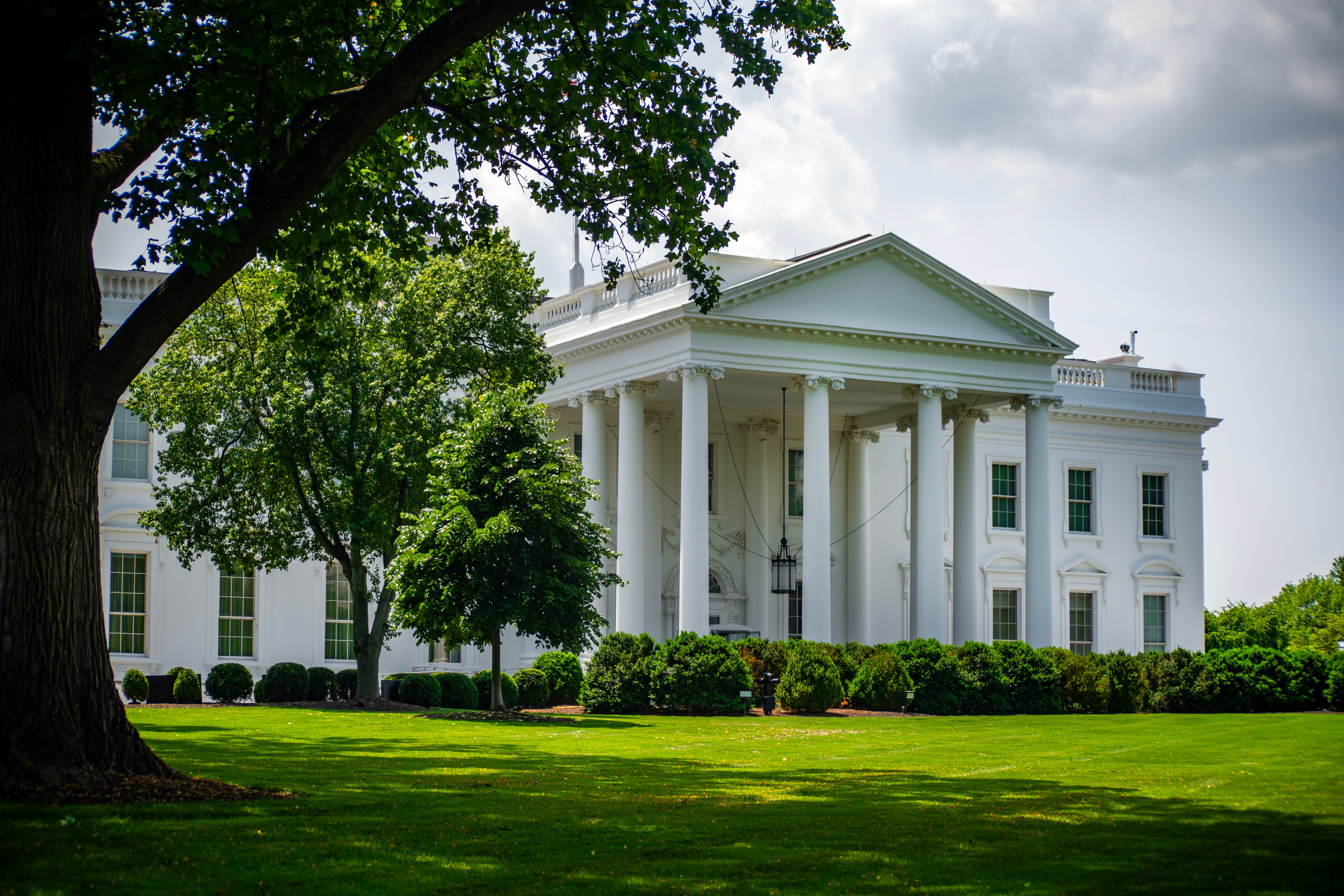
The White House looked as though a royal banquet had been catered by a highway rest stop. Photographs showed Trump standing proudly behind an enormous collection of hamburgers, arranged beneath the glittering chandeliers of the State Dining Room. The contrast was magnificent. One of the most historically significant buildings in the world had been transformed into what might generously be described as the most elegant fast-food buffet ever assembled. It was the kind of image that required no caption, no political explanation, and absolutely no additional comedic assistance.
Critics questioned the appropriateness of the meal and the broader circumstances of the shutdown, while others found the gesture amusing, practical, or perfectly suited to a group of college football players. Somewhere in the middle was the unforgettable visual of America’s most famous fast-food enthusiast hosting a championship dinner with enough burgers to feed a small army. It wasn’t traditional presidential elegance, but it was undeniably memorable. And if there’s one thing Trump understands, it’s that a room full of hamburgers can generate more attention than a room full of policy advisers.
Four Seasons Total Landscaping: The Press Conference Nobody Could Have Invented
If there were an Academy Award for accidental political comedy, the events of November 7, 2020, would deserve serious consideration. As the presidential election was being called for Joe Biden, Trump’s legal team prepared to hold a press conference in Philadelphia. Trump initially announced that the event would take place at the Four Seasons. Not the luxury hotel. Four Seasons Total Landscaping, a small landscaping business in an industrial-looking area of Philadelphia, situated near a crematorium and an adult bookstore.
The press conference proceeded outside the landscaping company’s premises, with Rudy Giuliani speaking to reporters against a backdrop that bore little resemblance to the opulent surroundings normally associated with the Four Seasons brand. The internet could hardly believe what it was seeing. There was the former mayor of New York City, representing the president’s legal challenge to an election, addressing the nation from the parking area of a landscaping business. The juxtaposition was so perfect that comedy writers could have spent months developing it and still been accused of making the story too unrealistic.
The business itself became a pop-culture landmark, selling merchandise and attracting visitors curious about its unexpected place in American political history. For a brief moment, a modest Philadelphia landscaping company became one of the most famous locations in the country. And the story captured something wonderfully strange about the Trump era: even the most serious political events could somehow unfold in settings that seemed borrowed from an absurdist comedy. Whatever one thought about the election dispute, the location alone had already secured its place in American folklore.
The Hair, the Ties, and the Unmistakable Trump Aesthetic
Then there’s the visual identity. The hair alone has been the subject of more speculation, commentary, and late-night comedy than most political careers. The long red ties, the distinctive gestures, the exaggerated facial expressions, the thumbs-up photographs, the gold interiors, and the oversized signature have all become recognizable elements of a public persona that has existed for decades. Trump doesn’t simply appear in a room. He arrives with an entire visual vocabulary, a carefully cultivated aesthetic that sits somewhere between Manhattan real estate royalty, Las Vegas showmanship, and a professional wrestling promoter preparing to announce the main event.
His style is so recognizable that comedians can impersonate him with a few hand movements and a particular way of speaking. His silhouette has become a kind of political logo, reproduced endlessly in cartoons, costumes, memes, and television sketches. There’s something fascinating about a public figure whose personal presentation is so distinctive that it transcends politics and enters the realm of pop culture. You don’t need to follow his policies to recognize the performance, and you don’t need to admire his fashion choices to acknowledge that the man has established one of the most recognizable public personas of the modern era.
Even his mannerisms have become cultural shorthand. The familiar hand gestures, the dramatic pauses, the exaggerated descriptions of people and events, and the tendency to assign memorable nicknames to opponents have all become part of the broader Trump mythology. It’s difficult to imagine another contemporary political figure whose physical movements, vocabulary, and personal style could be so easily identified without ever mentioning his name.
When Politics Becomes a Sitcom Nobody Can Turn Off
The bizarre moments don’t stop with water bottles, paper towels, or hamburgers. There’s the AI-generated pope portrait, the proposals involving Greenland and Canada, the renaming of the Gulf of Mexico for federal purposes, the presidential Tesla showcase, the UFC event at the White House, and the escalator that stopped at the United Nations and somehow became an international controversy. Individually, these events range from harmless comedy to serious disputes over political judgment, ethics, or diplomacy. Together, they form a cultural phenomenon unlike anything modern American politics has experienced.
Trump has managed to turn the presidency into a continuous source of memes, catchphrases, arguments, and moments that seem designed for television, even when nobody appears to have planned them. His supporters often enjoy the irreverence, while his critics frequently regard the same behavior as embarrassing or inappropriate. But both groups participate in the spectacle. Every viral clip gets shared, every strange remark becomes a headline, and every unusual encounter is replayed, analyzed, parodied, and debated. The result is a political culture in which the president can command enormous attention without necessarily making a major policy announcement.
And that’s a strange kind of power. Trump has spent decades understanding something that traditional politicians often struggle to grasp: attention is a currency, and in the modern media environment, few people have demonstrated a greater ability to command it. Sometimes that attention comes from admiration, sometimes from outrage, and sometimes from the simple human desire to witness something completely unexpected. Whatever the source, the audience keeps returning.
The Man, the Meme, and the American Audience
Perhaps the most remarkable thing about Donald Trump isn’t any particular incident. It’s the sheer volume of moments that have become part of America’s cultural memory. Little Marco and the water bottle, paper towels flying through a Puerto Rican relief center, covfefe, the solar eclipse, the White House fast-food banquet, and Four Seasons Total Landscaping. These are not conventional presidential milestones. They’re the kind of stories people tell at dinner parties, share with friends, and revisit years later because they’re simply too bizarre to forget.
Beneath the comedy is an interesting contradiction. Trump is one of the most scrutinized political figures in modern history, yet he frequently behaves with the spontaneity of someone who doesn’t seem particularly concerned about how a moment will look after it’s been edited into a viral clip. Sometimes that produces genuinely funny television, sometimes it produces controversy, and sometimes it produces both at exactly the same time. The same public figure who can participate in serious international negotiations can become the center of a national conversation about the correct way to drink water.
That’s not a normal political career. That’s an American cultural phenomenon, one that has blurred the boundaries between government, entertainment, celebrity, and the internet in ways that future generations may find difficult to understand. Trump didn’t invent the intersection of politics and show business, but he has certainly demonstrated how thoroughly the two can become intertwined.
The Bizarre State of the Union
At some point, future historians will attempt to explain this period of American life. They’ll examine elections, economic decisions, international relationships, legal disputes, and the long-term consequences of Trump’s presidency. But they’ll also have to explain the memes. They’ll have to explain why millions of Americans became fascinated with a senator drinking water, why a president tossed paper towels like basketballs, why a nonsensical word briefly dominated the internet, and how a landscaping company became an unlikely landmark in presidential history. They’ll have to explain why a country capable of sending spacecraft beyond the solar system could become completely absorbed in the question of whether its president looked directly at the sun. And they’ll probably need a sense of humor to get through it.
Because whatever one’s political views, there is something profoundly human about the absurdity of it all. The most powerful office in the country is still occupied by a person. A person who makes jokes, gets thirsty, enjoys hamburgers, makes mistakes, says strange things, and occasionally does something so unexpected that the entire world stops to watch. That doesn’t eliminate the responsibilities of the presidency, and it doesn’t excuse decisions that deserve serious scrutiny. But it does remind us that history isn’t always solemn. Sometimes it’s ridiculous, sometimes it’s unintentionally hilarious, and sometimes the most memorable moments are the ones nobody could have scripted.
The bizarre state of the union under Trump isn’t simply that America has an unconventional president. It’s that the country has found itself living through a period in which politics, entertainment, celebrity culture, and internet absurdity have become almost impossible to separate. Every presidency has its defining moments, but few have produced such an extraordinary collection of images, catchphrases, and scenes that seem destined to survive long after the political arguments themselves have faded.
America may never agree on Donald Trump, his policies, or his place in history. But the water bottle, the paper towels, the hamburgers, and Four Seasons Total Landscaping have already secured their place in political folklore. And whether we remember these moments with affection, embarrassment, disbelief, or uncontrollable laughter, they have become part of the strange cultural fabric of modern American life.
Welcome to the bizarre state of the union under Trump, where the news occasionally reads like satire, the satire struggles to keep up with the news, and the rest of us are left wondering what on earth we’re going to see next.
About The Author