
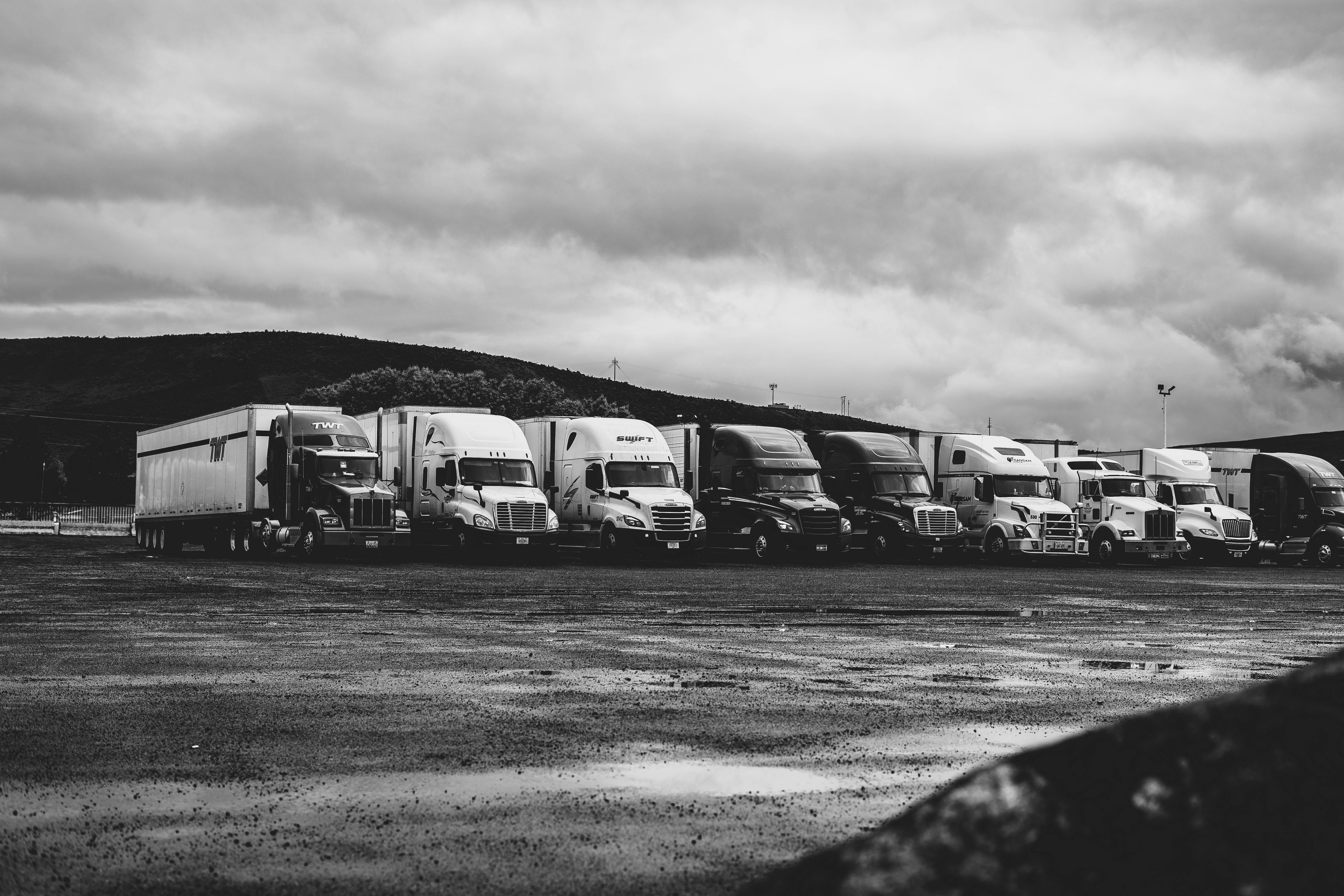
Diesel Shortage: The Fuel Crisis Behind Rising Prices—and the Chance to Rethink How We Consume
How the Iran war, strained refineries, and global freight are shaping inflation—and what a less oil-dependent economy could look like
Updated September 23, 2026
A loaf of bread does not smell like diesel. Neither does a box of medicine, a new sofa, or a basket of vegetables. Yet diesel may have helped grow the wheat, harvest it, move it to a mill, deliver the flour to a bakery, and stock the finished bread on a shelf. The same fuel moves freight through much of the modern economy. When its price rises sharply, the effects travel far beyond the pump.
That is why the current diesel shortage matters even to people who have never owned a diesel vehicle. The phrase describes a tight market with depleted inventories, disrupted supply routes, and unusually high prices. It does not mean that every country has run out of fuel. Availability differs by region, and some buyers can still obtain diesel if they pay enough for it. For a farmer, independent trucker, or food distributor, however, a fuel that is available only at a punishing price can still threaten the business.
The scale of the pressure is clear. The International Energy Agency (IEA) reported that global refinery throughput in August 2026 was 4.2 million barrels per day below its level a year earlier. It said sharply higher diesel refining margins helped drive record margins in the Atlantic Basin. In the United States, the Energy Information Administration (EIA) forecast that distillate inventories—a category that includes diesel—would fall below 100 million barrels in September and stay below their five-year low through much of 2027. AAA recorded a U.S. national diesel average of about $6.52 per gallon in its latest available reading, compared with about $3.69 a year earlier. (iea.org, eia.gov, gasprices.aaa.com)
Those figures describe more than an energy story. They describe a potential cost shock for food, construction, deliveries, and trade at a time when inflation is already stretching household budgets. They also expose a deeper question: how did everyday life become so dependent on a fuel refined from oil and moved through vulnerable global routes?
How crude oil becomes diesel
Diesel begins underground as part of crude oil, a mixture of many hydrocarbons. At a refinery, crude is heated and sent into a distillation unit. Its components separate according to their boiling points. Lighter fractions rise higher in the tower; medium-weight fractions, including those used to make diesel, collect lower down. Refiners then process and treat those fractions to produce fuels that meet specifications. The EIA describes refining as three broad stages: separation, conversion, and treatment. (eia.gov)
Conversion matters because a refinery cannot simply choose to turn every barrel of oil into diesel. The crude it receives has particular properties, and the refinery has a particular configuration. Additional processing can change the balance of products, but equipment, available hydrogen, maintenance needs, and operating limits constrain the result. Treatment also removes impurities: catalytic hydrotreating uses hydrogen to reduce sulfur and other compounds so the finished fuel can meet standards and work with modern emissions controls. (eia.gov, eia.gov)
A 42-gallon barrel of crude yields several products, not 42 gallons of diesel. As a general U.S. refinery average, the EIA says a barrel produces about 11 to 13 gallons of distillate fuel, most of which is sold as diesel, alongside gasoline, jet fuel, and other products. Actual yields vary. This helps explain why abundant crude oil does not automatically solve a diesel shortage: the crude must reach a suitable refinery, be processed, and move through another distribution network before it reaches a truck. (eia.gov)
From there, diesel travels through pipelines, ships, terminals, and trucks before arriving at fleet depots, farms, and filling stations. Each link needs capacity and time. A refinery outage or a disrupted shipping route cannot always be repaired by purchasing oil somewhere else. The buyer may need the finished fuel in the right location, in the right quantity, this week.
Why trucks use diesel instead of gasoline
Diesel became central to freight for practical engineering reasons. A diesel engine compresses air until it becomes hot, then injects fuel into it. The fuel ignites under compression. A conventional gasoline engine generally ignites an air-fuel mixture with a spark plug. Diesel engines’ high compression ratios contribute to their efficiency, while diesel fuel itself contains more energy per gallon than gasoline. These characteristics help a truck travel farther on a given volume of fuel while hauling a heavy load. (eia.gov, eia.gov)
Heavy trucks also need dependable pulling power over long operating hours. Diesel powertrains have historically offered a useful combination of torque, durability, fuel economy, and range for that work. A diesel engine can be heavier and more expensive to build because it must withstand high compression, but the fuel savings and service life have often justified that cost for commercial operators. Gasoline works well in many lighter vehicles; changing a long-haul fleet from diesel to gasoline would generally sacrifice the advantages for which those trucks were designed. (energy.gov, eia.gov, eia.gov)
The reliance reaches beyond highways. Diesel powers farm equipment, construction machinery, trains, and some generators. The EIA estimates that diesel represented about 22% of U.S. transportation energy consumption on an energy-content basis. That reach makes a diesel price surge unusually effective at moving through the economy. A driver paying more for gasoline feels a direct household expense. A business paying more for diesel may eventually adjust the prices paid by thousands of customers. (eia.gov)
The Iran war and the routes that connect the world
The war involving Iran has made this diesel shortage more severe. In March, the IEA described a collapse in crude and petroleum-product flows through the Strait of Hormuz, a vital route from the Gulf to world markets. Before the war, around 20 million barrels per day of crude and oil products moved through the strait; flows fell to a trickle at the height of the disruption described in its March report. Production cuts followed because exporters had limited routes around the waterway and could not keep filling storage indefinitely. (iea.org)
Conditions have changed during the year rather than following one uninterrupted shutdown. The IEA reported a partial recovery in Gulf production and shipping in June, followed by renewed security risks. Its September assessment said more than 10 million barrels per day of Gulf oil output remained shut in during August. It also reported that tanker traffic came under renewed attacks, oil held on ships fell, and tanker costs rose sharply. That sequence matters: uncertainty can raise freight and insurance costs even when some barrels still move. (iea.org, iea.org)
The conflict reaches diesel through several channels at once. Restricted crude flows deprive some refineries of feedstock. Disrupted exports keep finished fuels from buyers. Longer or riskier shipping journeys cost more. Meanwhile, losses in refinery activity in the Middle East, Russia, and crude-importing parts of Asia reduce the system’s ability to replenish diesel inventories. The IEA forecast in September that global oil supply would fall by 5.7 million barrels per day in 2026, with a fuller Gulf recovery pushed into 2027. That is the IEA’s forecast, not a guarantee that every disruption will last that long. (iea.org)
Oil markets can also respond in surprising ways. A crude benchmark may decline while diesel remains expensive because refiners cannot quickly produce and deliver enough of the finished fuel. Conversely, very high prices can suppress diesel use as businesses cut journeys or output. The IEA now expects global oil demand to decline by 2.5 million barrels per day in 2026, with substantial losses in middle distillates and petrochemical feedstocks. Falling demand may ease a market shortage, but it can also signal economic strain. (iea.org)
How the diesel shortage reaches everyday prices
Consider the journey of a tomato. A farmer may use diesel-driven equipment on the field. Fuel moves workers, inputs, and the harvest. A truck takes the tomatoes to a packing facility; another carries them to a distribution center; a final delivery reaches the store. Refrigeration, packaging, wages, and retail operations add other costs along the way. Diesel is only one part of the shelf price, but it touches the product repeatedly.
That does not mean a 50% rise in diesel creates a 50% rise in tomato prices. The share of fuel in a product’s total cost differs by product, distance, and business. Companies may absorb a fuel spike temporarily or pass some of it through freight surcharges. Existing contracts can delay adjustments. Competition may prevent a price increase until a supplier can no longer operate at the old rate. The effect on a grocery receipt can therefore arrive months after the change at the pump.
Perishable goods may be particularly vulnerable to delays and temperature-controlled transport costs. Heavy, bulky, low-margin goods can also be sensitive to freight rates. Construction costs may rise when diesel-powered equipment becomes more expensive to operate and materials become costlier to move. Smaller operators often face sharper cash-flow pressure because they buy fuel now but collect payment later. If some carriers stop serving a route or leave the market, customers may face fewer options even after the first fuel spike passes.
The inflation backdrop makes that chain more consequential. In the latest U.S. consumer price report available as of September 23, prices were 3.4% higher over the year through August 2026. Food prices were up 2.7% over the year. That report cannot tell us how much September’s diesel surge has affected groceries; much of the surge occurred after the prices in that report were collected. It does show that the fuel shock is arriving before inflation has fully subsided. (bls.gov)
Globally, the International Monetary Fund (IMF) said in July that disinflation had stalled and projected growth of 3.0% in 2026. Its outlook stressed that energy-importing and vulnerable economies face greater pressure from the war shock. Higher diesel prices add a difficult combination: they raise operating costs while taking purchasing power from consumers. Businesses may increase prices, reduce margins, postpone investment, or do some of each. A central bank can try to restrain inflation, but higher interest rates cannot refine a missing barrel of diesel. (imf.org)
The environmental bill that the pump price cannot show
A high fuel price is painful, but a low one never captured the full cost of oil dependence. Producing diesel starts with extraction, which can disturb habitats and create risks to water and land. Moving crude and fuel through pipelines, tankers, and terminals carries spill risk. NOAA documents how oil releases can damage wetlands and oyster reefs, threaten wildlife, interrupt fisheries, and harm the communities that depend on those ecosystems. The risk is not an argument that every shipment ends in a disaster. It is a cost inherent in operating such a vast extraction and transport system. (darrp.noaa.gov)
Oil production also has emissions before a truck starts its engine. Methane can escape from oil and gas operations, and it is a powerful greenhouse gas. The IEA estimates that the wider energy sector—including oil, gas, coal, and bioenergy—accounts for around 40% of methane emissions from human activity. Extraction, refining, distribution, and combustion should all be considered when judging diesel’s climate cost; counting only exhaust leaves out part of the story. (iea.org)
Combustion creates its own damage. Burning petroleum diesel releases carbon dioxide. Diesel exhaust can also contain particulate matter and nitrogen oxides. Nitrogen oxides help form ground-level ozone and additional particles that harm respiratory health. Modern low-sulfur fuels, filters, and emissions controls have reduced pollution from newer equipment, but older engines and concentrated truck traffic remain serious concerns, especially near freight corridors and depots. The EIA estimates that U.S. diesel consumption accounted for about 452 million metric tons of transportation-sector carbon dioxide emissions in 2025. (epa.gov, eia.gov)
Climate and health costs do not fall evenly. The people breathing exhaust beside a warehouse may not be the people receiving the next-day delivery. Farmers facing rising fuel bills may have done little to cause a distant conflict. Lower-income households spend a greater share of their income on essentials and have less room to absorb rising prices. The diesel shortage makes those imbalances visible: the convenience enjoyed at one end of a supply chain may impose financial and environmental costs elsewhere.
Could another fuel take diesel’s place?
Biodiesel is one available substitute for some uses. It can be made from vegetable oils, animal fats, or recycled cooking grease. Its production commonly uses a chemical process called transesterification, producing biodiesel and glycerin. Biodiesel is typically blended with petroleum diesel, and the suitable blend depends on the engine, weather, and fuel specifications. Waste-derived feedstocks can be attractive because they make use of material already generated, but their available volume is limited. Fuel grown from crops introduces competing demands for land, water, and agricultural production. (afdc.energy.gov, afdc.energy.gov, afdc.energy.gov)
Renewable diesel is a different fuel, despite the similar name. Producers commonly make it by treating fats and oils with hydrogen, yielding a hydrocarbon fuel that meets the same ASTM D975 specification as petroleum diesel. It can therefore work in existing diesel engines and infrastructure. That compatibility is valuable for fleets that cannot replace trucks immediately. Its environmental performance, however, depends on the feedstock and production process. Expanding fuel crops at the expense of forests or food production could erode the intended benefit. Even the best substitute cannot be scaled indefinitely from a finite supply of used cooking oil. (afdc.energy.gov)
Electric trucks offer a more fundamental change: they can remove diesel combustion from a route altogether. The strongest early applications tend to be predictable journeys where a truck can return to a depot for charging, such as local deliveries or some port operations. The IEA estimates that battery-electric heavy trucks use substantially less energy than diesel trucks of comparable size. Yet purchase prices, charging capacity, vehicle range, route scheduling, battery materials, and the source of electricity all affect the real-world result. Replacing a diesel truck with an electric one is a system project, not a change of fuel at the same pump. (iea.org)
Hydrogen fuel-cell trucks are being developed for freight uses that may benefit from different range and refueling arrangements. They require suitable vehicles and a hydrogen supply network, and the climate result depends heavily on how the hydrogen is made. Hydrogen produced with high-emission energy cannot be assumed to be environmentally clean simply because the vehicle has no tailpipe carbon emissions. Natural-gas trucks can also diversify fuel supply in some settings, but methane leakage upstream and from vehicles can diminish their climate advantage. (energy.gov, afdc.energy.gov, afdc.energy.gov)
There is no credible single-fuel replacement for every truck, tractor, ship, and machine in 2026. The practical route is to match tools to jobs: cleaner liquid fuels where existing engines remain necessary; electric vehicles on routes that suit charging; efficiency improvements across fleets; and less freight movement where it adds little value. Diversification may improve resilience to a petroleum shock, but each alternative must be judged across its full life cycle rather than by its name.
The case for buying local—and its limits
The diesel shortage offers a reason to examine how far essentials travel before they reach us. Buying produce from a nearby seasonal grower can support regional farms and shorten parts of a supply chain. Strong regional food networks may give a community more options when distant shipping routes become expensive or unreliable. Local processing and repair businesses can preserve skills and capacity close to customers. Those benefits matter even when they are difficult to express as a single carbon number.
Still, local does not automatically mean lower emissions. A crop grown in an energy-intensive local greenhouse can carry a larger footprint than one grown efficiently elsewhere and shipped in a full truck or vessel. A series of nearly empty personal car trips to separate farms can erase some transport savings. The IPCC notes that local sourcing and efficient transport can reduce food loss and emissions in some cases, while inefficient local production can offset those gains. The useful questions are how something was made, whether it is in season, how it is transported, and whether it will actually be used. (ipcc.ch)
Food choice and waste can matter at least as much as distance. The United Nations Environment Programme estimated that 1.05 billion tonnes of food were wasted in 2022 across households, food service, and retail—nearly one-fifth of food available to consumers. Every discarded item carries the resources used to grow, process, refrigerate, package, and transport it. Preventing waste avoids those costs without requiring a new fuel or a new truck. (unep.org)
A practical response is therefore more thoughtful than a rule to buy everything nearby. Choose seasonal local food when its production and delivery make sense. Support regional suppliers that combine deliveries efficiently. Buy quantities that can be eaten. Repair a usable item before ordering a replacement. Consolidate orders and errands where possible. These choices reduce demand for energy and materials while giving people more control over their budgets.
Changing the habits behind the fuel demand
The modern economy encourages speed and abundance without asking us to notice the journeys behind them. A single inexpensive item ordered for immediate delivery may require warehouse handling, a partly filled van, packaging, and a separate last-mile trip. None of those steps is free, even if the checkout screen says “free shipping.” The diesel shortage has brought part of that hidden bill into view.
Consumers alone cannot redesign freight. Businesses decide how they package products, fill vehicles, place warehouses, and schedule shipments. Governments shape rail, port, charging, and energy infrastructure. But consumers influence which services grow. Waiting to combine purchases, choosing durable products, and rewarding businesses that disclose sensible shipping practices can reduce unnecessary trips. For institutions buying at scale—schools, hospitals, retailers, and local governments—the same choices can have much larger effects.
There is also a difference between resilience and withdrawal from global trade. Many regions cannot produce every medicine, food, or industrial component they need. Trade helps them obtain goods that local production cannot supply efficiently. Resilience means avoiding needless dependence on a single route or source while maintaining reliable exchange. It means having regional capacity for essentials, multiple suppliers for critical goods, and transport systems that do not collapse when one fuel becomes scarce.
The transition must be fair to the people doing the work. A trucker with a financed diesel vehicle cannot replace it because someone urges a greener lifestyle. A farmer cannot leave a harvest in a field while alternative equipment is built. Policies that support charging infrastructure, efficient vehicles, and viable lower-emission fuels need to account for replacement cycles and small-business finances. The IMF recommends targeted, temporary help for vulnerable households and liquidity support for viable businesses during energy shocks, while warning that broad price caps can strain budgets and aggravate shortages. (imf.org)
What happens next?
A supply recovery remains possible. Restored trade routes, steadier refinery operations, and rebuilding inventories could ease diesel prices and limit the effect on household goods. The EIA’s September outlook forecast U.S. diesel averaging $5.07 per gallon in 2026 and $4.40 in 2027, reflecting an expectation of some relief. Its model inputs were finalized on September 3, however, before later developments; an annual average is not a promise about prices on any particular day. (eia.gov)
The harder scenario is prolonged tightness. If diesel remains expensive through successive freight and supply contracts, businesses have more opportunities—and sometimes more need—to pass costs along. Food, deliveries, and diesel-intensive services could then add to inflation even if other prices cool. A further disruption to shipping or refining would increase that risk. These are conditional predictions, not a claim that every grocery item will rise by a fixed percentage.
Watch the indicators beneath the headlines: distillate inventories, refinery throughput, diesel prices relative to crude oil, tanker and freight costs, and evidence that fuel surcharges are entering new contracts. Then watch whether consumer food and goods prices follow. The lag matters. So does the distinction between a shortage eased by restored supply and one eased because people can no longer afford to buy as much.
The central lesson reaches beyond this crisis. Diesel helped build a world in which a product can cross oceans and continents before appearing at a doorstep. That system has delivered immense value, but its dependence on oil, distant production, and constant movement has consequences for prices, public health, ecosystems, and climate. The answer is not to abandon movement or trade. It is to make each journey count, strengthen regional options, waste less of what has already been produced, and invest in freight systems with more than one way to move.
The diesel shortage is a warning from a supply chain most people rarely see. The prices will tell us how much the immediate disruption costs. Our response will determine whether we remain just as exposed when the next one arrives.
About The Author